Archives
-
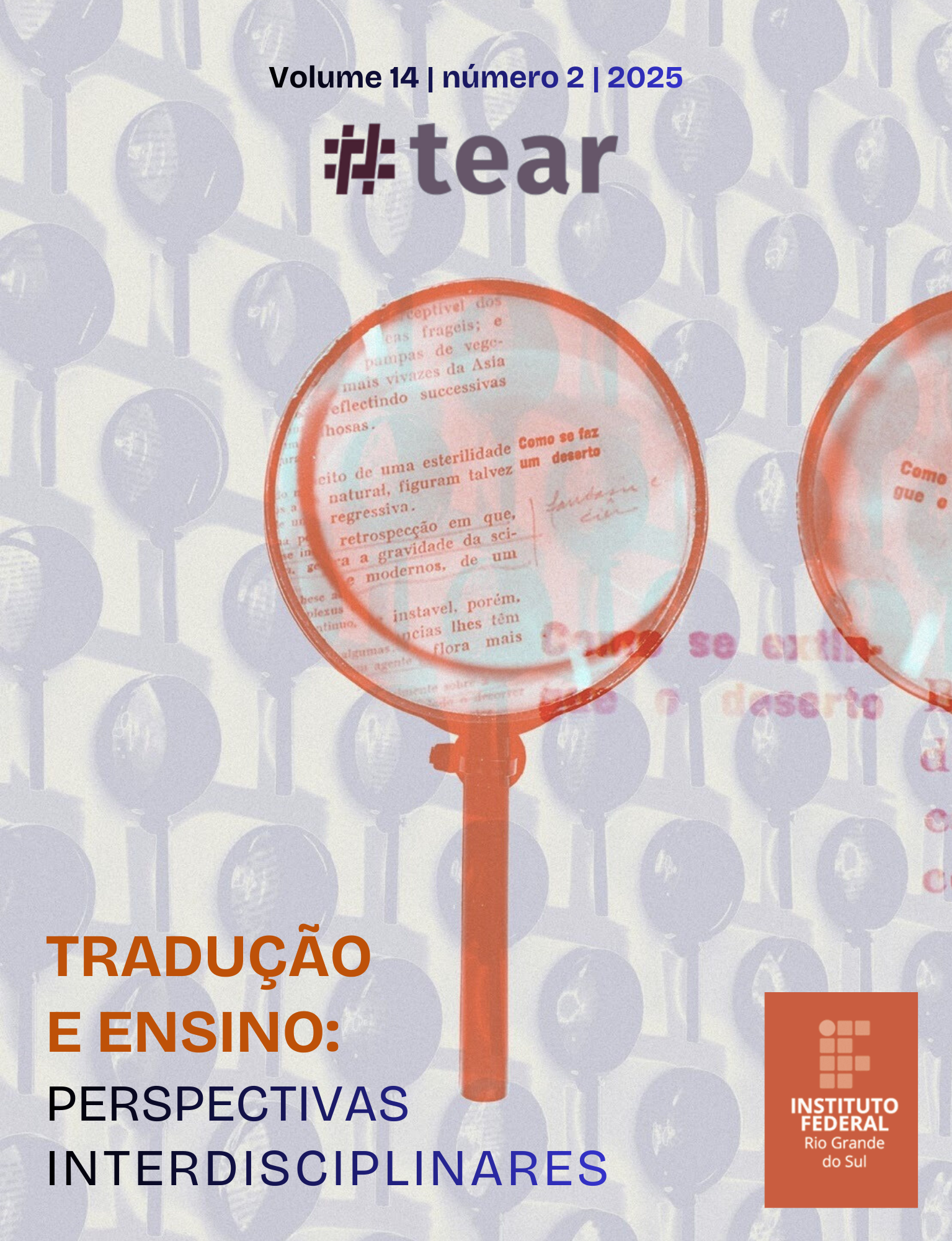
TRANSLATION AND TEACHING: INTERDISCIPLINARY PERSPECTIVES
Vol. 14 No. 2 (2025)This special edition focuses on the possibilities offered by translation and teaching, understood in an interdisciplinary perspective. In recent years, translation as a whole has been impacted by a series of profound changes: the rise of neural machine translation; the widespread use of large language models; the introduction of post-editing as a translatorial task; efforts aimed at "de-automatizing" translation so as to preserve its inherently human character; the notion that translation could be absorbed by other scientific disciplines; and questions about the future of Translation Studies in the face of these changes. At the same time, translation and teaching still encompass countless interdisciplinary possibilities related to translation and foreign languages; translation and media artifacts; translation and Brazilian Sign Language; translation and literature; translation and technology; and translation in the context of specific fields of knowledge. In this context, the dossier is an invitation to reflect on the perspectives and challenges at the intersection of translation, teaching and interdisciplinarity.
Organizers: Dr. Guilherme da Silva Braga (IFRS) & Prof. Dra. Patrícia Chittoni Ramos Reuillard (UFRGS).
---
Cover Art:
Reference: Desertões (2015), by Elida Tessler
Graphic design: Maíra VelhoArtist's note:
For the graphic design of this edition, I took Elida Tessler's Desertões (2015) as a reference. The artist, whose work interconnects literature and visual arts, rewrites and reinterprets the written word. In Desertões, Tessler brings together 1,018 photographs under magnifying glasses, recording excerpts underlined and annotated by translator Donaldo Schüler in his copy of Os Sertões, by Euclides da Cunha. Tessler translates literature into another system of signs, producing a work that is simultaneously commentary, translation, and creation, an action that also inspires the visual reinterpretation proposed for this cover. The graphic design seeks to highlight the transition between word and image, central both to Tessler's work and to contemporary possibilities for translation. The reference to the magnifying glass and fragments suggests closeness, analysis, and rereading, reflecting translation as an interdisciplinary and investigative practice, in dialogue with the multiple articulations between translation, teaching, and interdisciplinarity. -
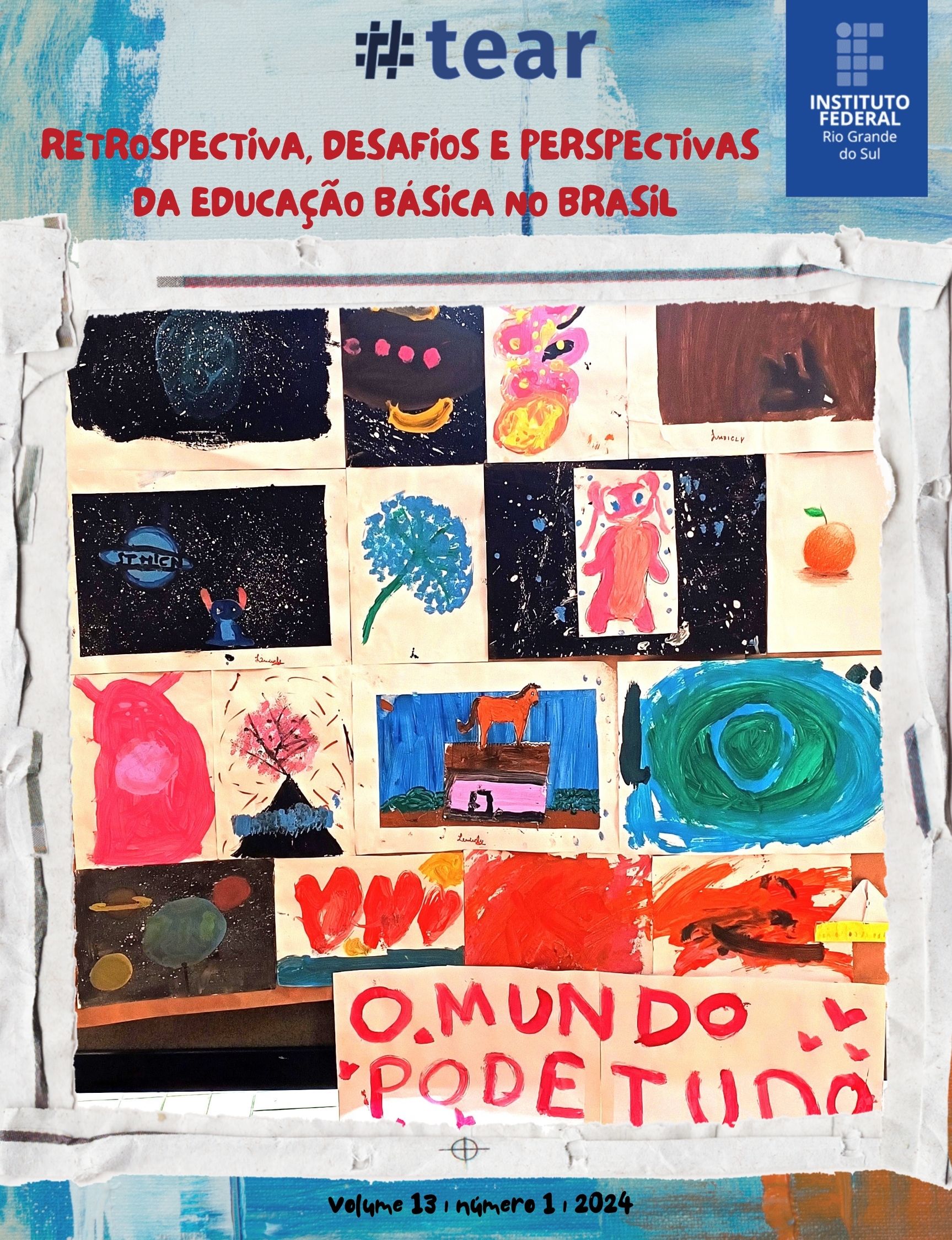
RETROSPECTIVE, CHALLENGES, AND PERSPECTIVES FOR BASIC EDUCATION IN BRAZIL
Vol. 13 No. 1 (2024)This special edition intends to outline guidelines, parallels, and perspectives for reflections facing different debates which lead Basic Education in Brazil - considered by Federal Law 9.394/1996/LDB the first level of teaching, comprising pre-school, primary, and secondary school. Acknowledging education as fundamental for individual social subsistence, their understanding as social subjects, fruition, as well as citizenship fulfilment, this call for papers aims at bringing multiple connections and views regarding what sort of education one has strived for within a country of deep social, cultural and demographic contrasts, which include alarming index of functional illiteracy. In view of this context, it’s necessary to establish guidelines to ensure the right to education and, beyond that, public policies focused on reducing inequalities linked to school failure/success. The complexity of these challenges, deepened in the ‘post-pandemic’ context, mainly in public schools, shoes the need to review pedagogical principles, which includes the national curriculum structure, plus the adoption of strategies intended to reinforce the access to basic quality education, as equal and democratic as possible. In this regard, the pandemic not only represented a sanitary crisis of historic proportions, but also brought as a consequence the highest adversity ever faced by Brazil’s education system in terms of guaranteeing school attendance and permanence as unequal remote learning has proved the importance of in person education for the ones who need to fill literacy gaps. Thus, #Tear has brought to light some challenges for basic education in Brazil, bearing in mind, among other ones, teaching practices, public policies, decolonial perspectives, human rights, as well as connections between what is established and practised for Basic Education.
Organizers: Prof. Dr. Juliana Carvalho Pereira (Prefeitura Municipal de Cachoeirinha), Dr. Filipe Xerxeneski da Silveira (IFRS) and Prof. Dr. Maria do Rocio Fontoura Teixeira (UFRGS). Cover photo*: Courtesy of Juliana Bublitz (personal archive) *Originally published in the article "O mundo pode tudo": a resiliência das crianças que perderam a casa na enchente (GZH, May 18, 2024). With this, #Tear seeks to pay tribute to all the people - and especially primary school students - affected by the flood that hit the state of Rio Grande do Sul in the first semester of 2024. Translated with DeepL.com (free version) -
EDUCATION AND FEMINISMS: DISPUTES AND CHALLENGES IN THE NEOLIBERAL CONTEXT
Vol. 14 No. 1 (2025)Rethinking education from a feminist perspective is an urgent, pressing need. Our America is going through difficult times. Neoliberal governments have stormed the region, and the many shades of fascism show their colors proudly and without shame. Capitalist interests join forces with conservative mentalities and put a check on people's rights and the role of the State in order to encourage widespread privatization and the wholesale transfer of public resources to private and foreign actors, which in turn threaten the sovereignty of countries and attack basic common goods such as education, universities and public science. Hate towards difference and sexual dissidence, as well as towards the underprivileged, the working class and the black and native communities is experiencing a sharp increase in several countries in Latin America. Feminism emerges as a privileged antagonist to neoliberalism: its counter-hegemonic perspectives and ways of thinking offer viable alternatives to envisioning and creating a different world with a serious commitment to equality. In this Special Edition, we aimed at reflecting on the current status of education – understood in the broadest possible sense – in the context of social, political, cultural and economic changes in the South American territories, with an emphasis on the various roles we have as subjects and their intersections with questions of class, gender, ethnicity and religion in our everyday lives and experiences. We have considered reflections at the micro, meso and macro-social levels so as to unfold the present (where history appears on the stage) in order to better understand the various aspects of social reality and the complexity of the present times, manifested as an expression of regression and resistance.
Organizers: Profa. Dra. Paola Bonavitta (Universidad Nacional de Córdoba) and Profa. Dra. Florencia María Paez (Centro de Investigaciones y Estudios Sobre Cultura y Sociedad)
Cover image: Freepik.
-
EDUCATION: THE INTEGRATION OF KNOWLEDGES
Vol. 13 No. 2 (2024)This special edition brings to light pedagogical processes built on dialogue and collaboration between different fields of knowledge. As a discipline, Education integrates all sorts of contributions from other sciences – and this bringing together of different contexts and realities supersedes fragmented pedagogical practices. The concept of “integration” here refers to the idea of the integral individual as a backdrop, as well as to integrating practices that draw on interdisciplinary, plural knowledges to focus on the integral education of the individual. By highlighting research carried out by professionals working in education and by bringing together academic research related to everyday educational practices, this thematic dossier aims to create a space for reflection through the exchange of experiences and the resignification of educational spaces and the role of education in society. Starting points for these reflections can be specific challenges in education, pedagogical and teaching practices, relevant contemporary issues and curriculum development with an integral approach to educational spaces, levels and modes.
Organizers: Prof. Jesus Jaqueline Russczyk (IFRS), Vicente Zatti (IFRS) , and Prof. Dr. Thiago Ingrassia Pereira (UFFS)
Cover art: Photo by Cimara Valim de Melo (2024)
-
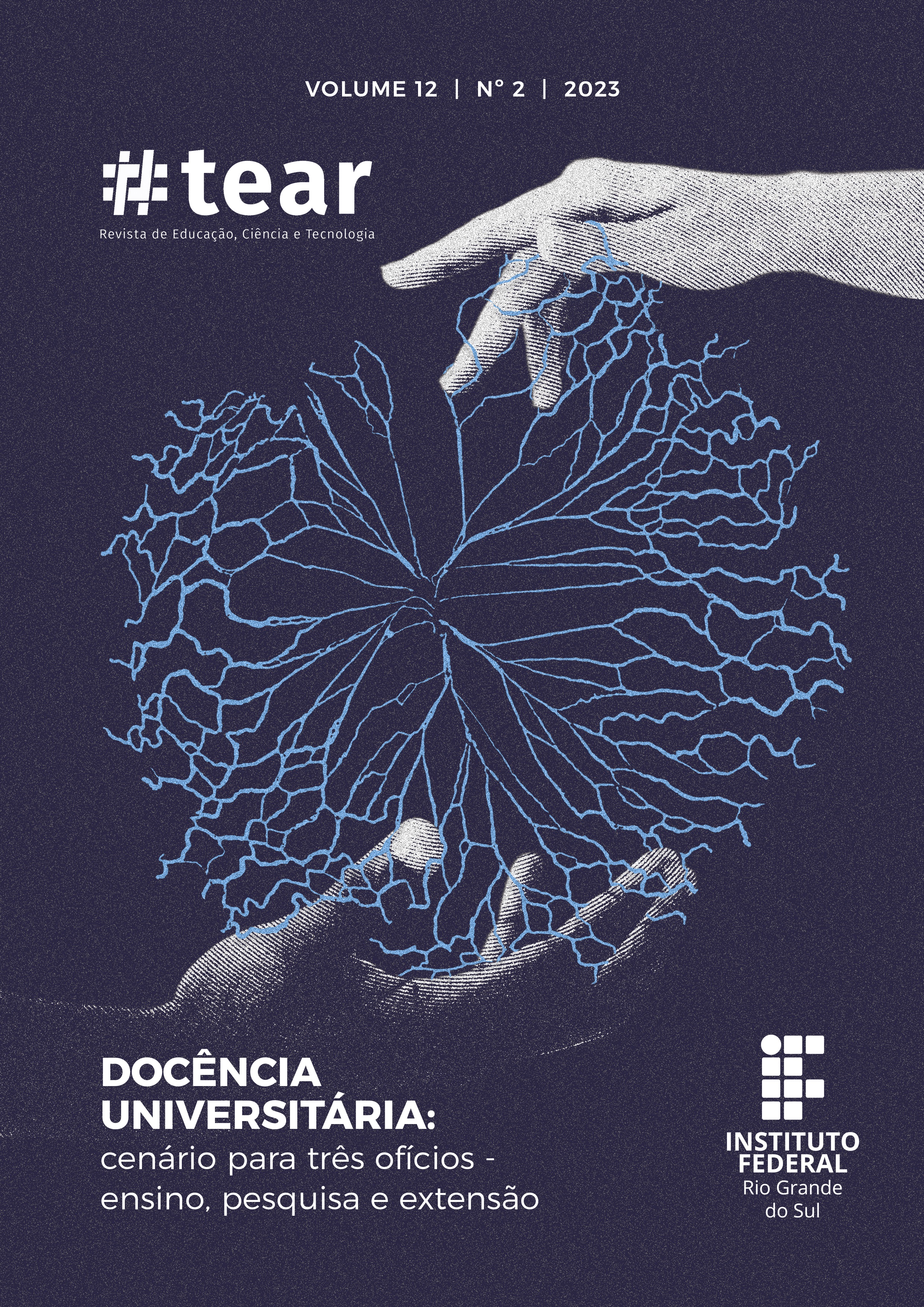
HIGHER EDUCATION: A SCENARIO FOR THREE DUTIES - TEACHING, RESEARCH AND EXTENSION
Vol. 12 No. 2 (2023)HIGHER EDUCATION: A SCENARIO FOR THREE DUTIES - TEACHING, RESEARCH AND EXTENSION
This special edition falls within the scope of higher education teaching. One aims at discussing university practices based on the teaching-research-extension tripod, as well as possibilities and conditions for higher education lecturers’ professional development as they perform their duties of teaching, researching and performing university extension activities. University teaching requires, beyond pedagogical skills, multiple or transversal knowledge coming from research and/or built via continuing education, personal and professional experiences, which bring an effect on teaching and learning. It demands and involves a number of skills and knowledge as well as didactic approaches in a systemic perspective. Faced with those challenges, one observes the need to problematize the complexity and diversity of knowledge and educational contexts regarding university teaching and higher education. Thus, studies and investigations on practices, pedagogical and curriculum approaches on university teaching, research and extension, as well the ones focused on continuing education and/or professional development for university lecturers and professors. Some questions have been raised on this matter: Who are the professionals working on higher education? What are their roles? What should one expect from them in terms of knowledge, practices, and professional experience? Who is responsible for their pedagogical education? The issues above comprise the aims for this special edition.
Organizers: Prof. Jesus Maria Sousa (Universidade da Madeira, Portugal), Prof. Osmar Hélio Alves Araújo (UFPB), and Prof. Dr. Emerson Augusto de Medeiros (UFERSA)
Cover Art:
Artist: Maíra Velho*
Title: Micélios, 2023
Technique: Digital Collage
About the artwork: I risk imagining higher education as a forest, where educating means creating from new knowledge and conditions. May teaching be mycelia - which, when networked, produce relationships, exchanges capable of making us question and transform our conception of society, ways of life, epistemologies, science and technology. May it contribute, above all, to overcoming contradictions; through collective actions, may teaching connect and nourish not only the web of scientific knowledge, but life.
*Visual artist| Masters in Visual Poetics
-
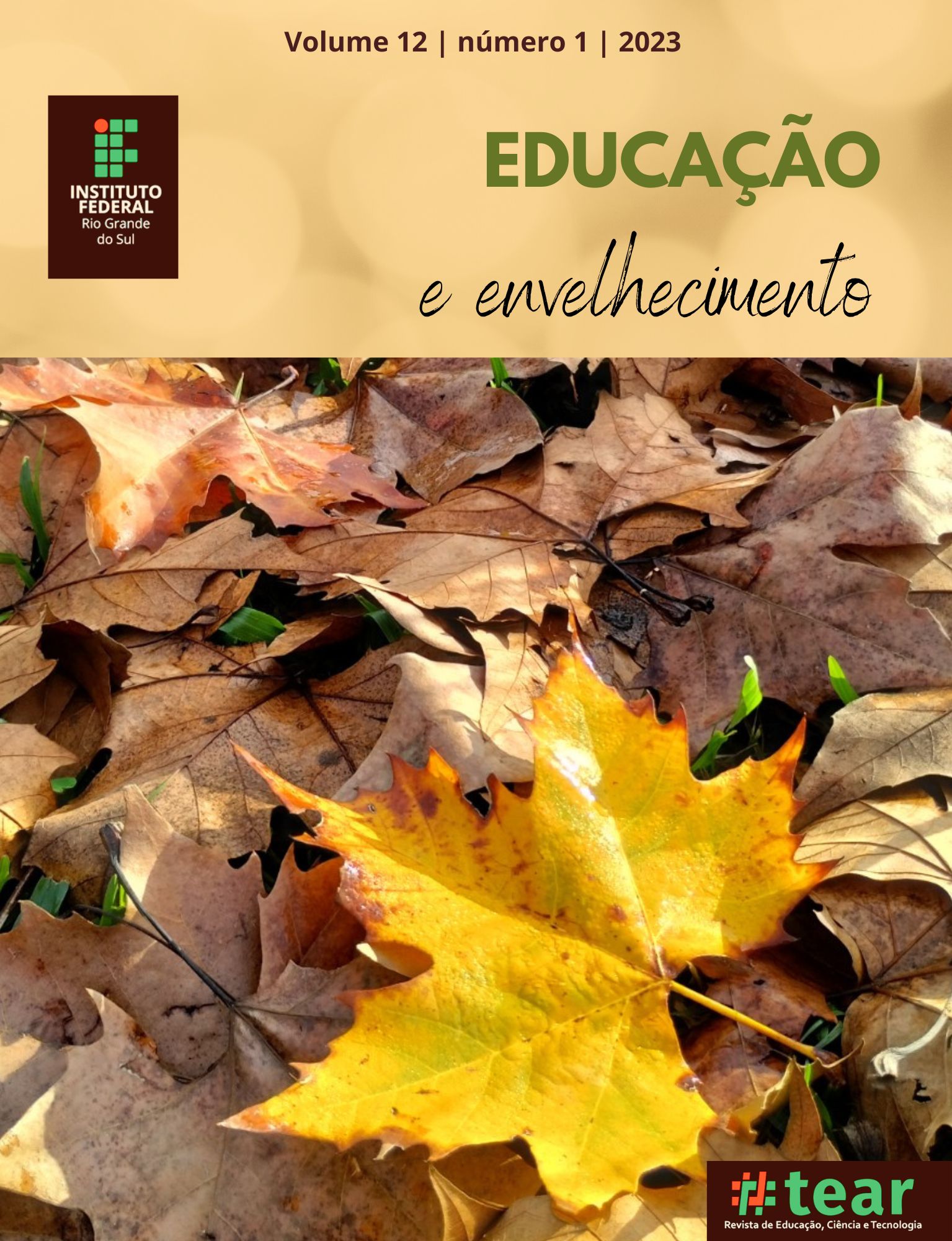
EDUCATION AND AGING
Vol. 12 No. 1 (2023)The Statute of Elderly will have completed in 2023 two decades since its promulgation. Comprised of a number of precepts which intend to reduce or even end segregation, commonly faced by the elderly population due to prejudice, disrespect or neglect, the legal document is an important achievement for society as a whole. Beyond penalties expected in case of violation of rights, the law mentions the inclusion of the elderly in cultural, educational, and leisure spaces, as well as it stablishes that school curricula should be adapted, in order to include contents concerning the process of aging, the respect to the elderly as to preclude discrimination and generate knowledge on the theme. (Art.22). In this regard, it's important to think aging as a matter involving all the collectivity, especially because it brings some effects on youth, reflecting on how they grow old, not only the old age. Thus, this special edition intends to foster discussion on rights, challenges, borders, and possibilities among people who age in the contemporary world, plus ways the topic can be questioned in an educational environment. By reflecting on education and aging, one focused on teaching, creative & inclusive learning as well as different artistic and cultural approaches.
Organizers:
Prof. Cristiane da Silva Alves (IFRS) and Prof. Johannes Doll (UFRGS)
Cover art: Photo by Cimara Valim de Melo (2023)
-
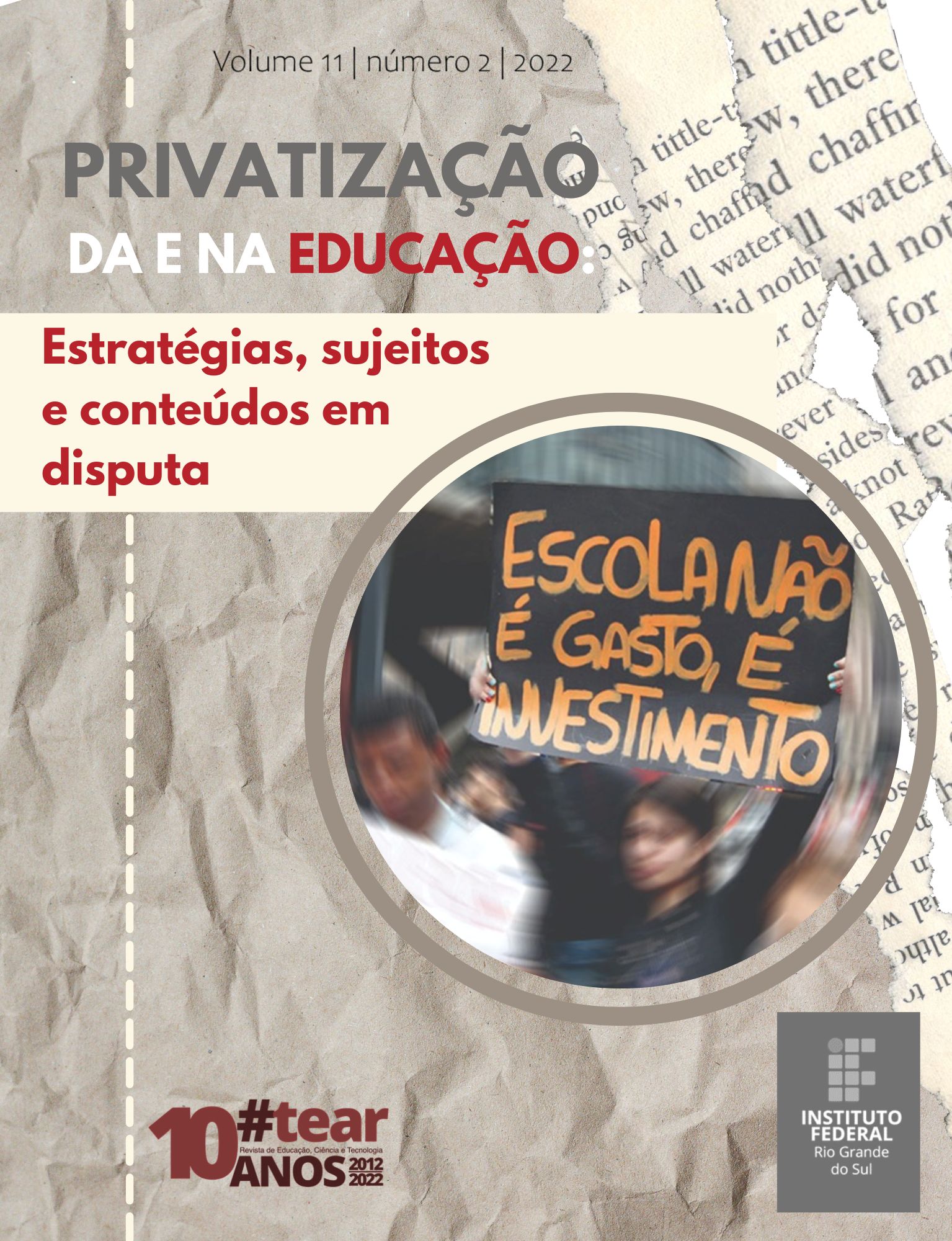
The privatization of and in education: strategies, subjects and contents in dispute
Vol. 11 No. 2 (2022)This dossier aims to deepen the debate about multiple forms of privatization of education that we experience in this particular period of capitalism, characterized, among other elements, by redefinitions in the role of the State. Researching the different subjects, their strategies and the contents of the disputed proposals is central to analyzing the relationship between public and private in education. In the current context, led by market representatives and neoconservative groups, this debate becomes urgent when we reflect on its implications for the process of democratization of education. In this special edition, #Tear: Journal of Education, Science and Technology proposes to discuss the various forms of materialization of privatization, its subjects and strategies at different levels and educational modalities.
Organizers:
Prof. Romir de Oliveira Rodrigues (IFRS) and Prof. Vera Maria Vidal Peroni(UFRGS)
Cover image: Edited from the newpaper A Verdade (2017).
-
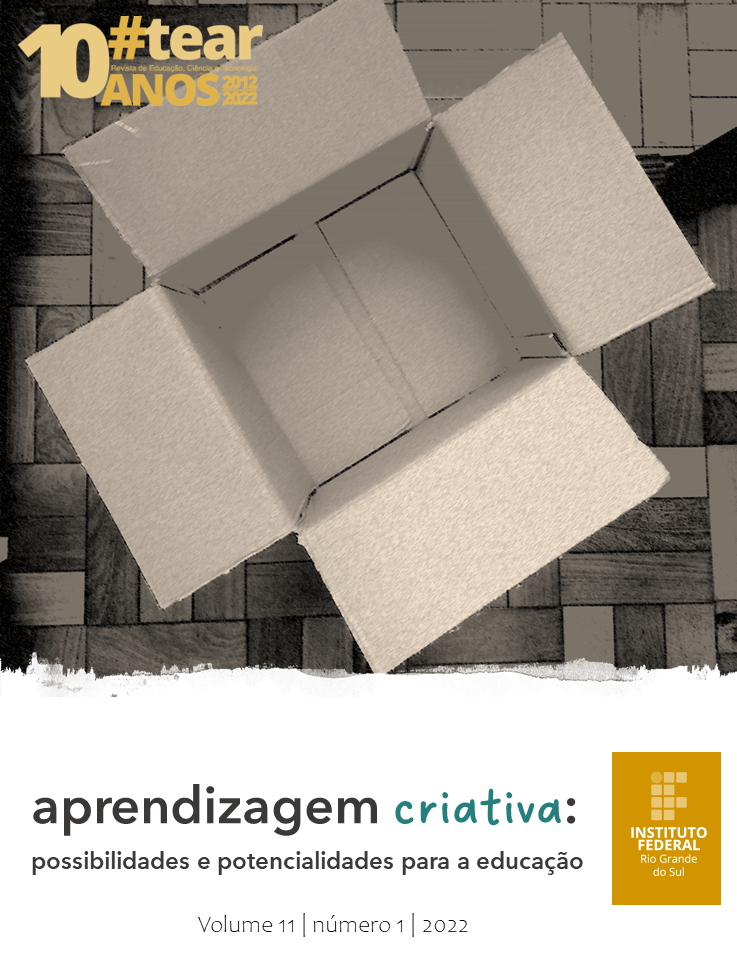
Creative Learning: Possibilities and Potentials for Education
Vol. 11 No. 1 (2022)The social changes triggered by technological development make traditional educational practices, shaped for a society that no longer exists, give way to new practices. The use of active student-centered methodologies in project development, problem solving, gamification, among others, has received special attention. However, the pedagogical approach adopted in the use of those methodologies often remains instructional and with little prominence on the part of the student. The development of new skills necessary for the society we live in depends on the adoption of a pedagogical approach that allows students to learn as well as learn to live together. Creative Learning pedagogical approach, proposed by the Lifelong Kindergarten group at the MIT Media Lab, advocates the creation of learning experiences based on an educational process in the form of a spiral, in which the student imagines, creates, plays, shares and reflects, generating new ideas and restarting the process. For this process to happen, the approach is stood on the use of "Projects" defined in agreement between teachers and students, in order to arouse the interest and respect the "Passion" of students, who develop and share their findings in "Pairs", and allow experimentation as well as error in a "Thinking at play". Creative Learning comes from Seymour Papert's Constructionism, for which the student builds his/her knowledge in a more relevant way when building something. Thus, this special edition aimed at bringing together works resulting from practical, theoretical and/or empirical research by using the concepts of Creative Learning in the design of learning experiences.
Organizers: Prof. Dr. Carolina Campos Rodeghiero (MIT/IFRS) and Prof. Dr. André Peres (IFRS)
Cover art: Photo by Cimara Valim de Melo (2022)
-
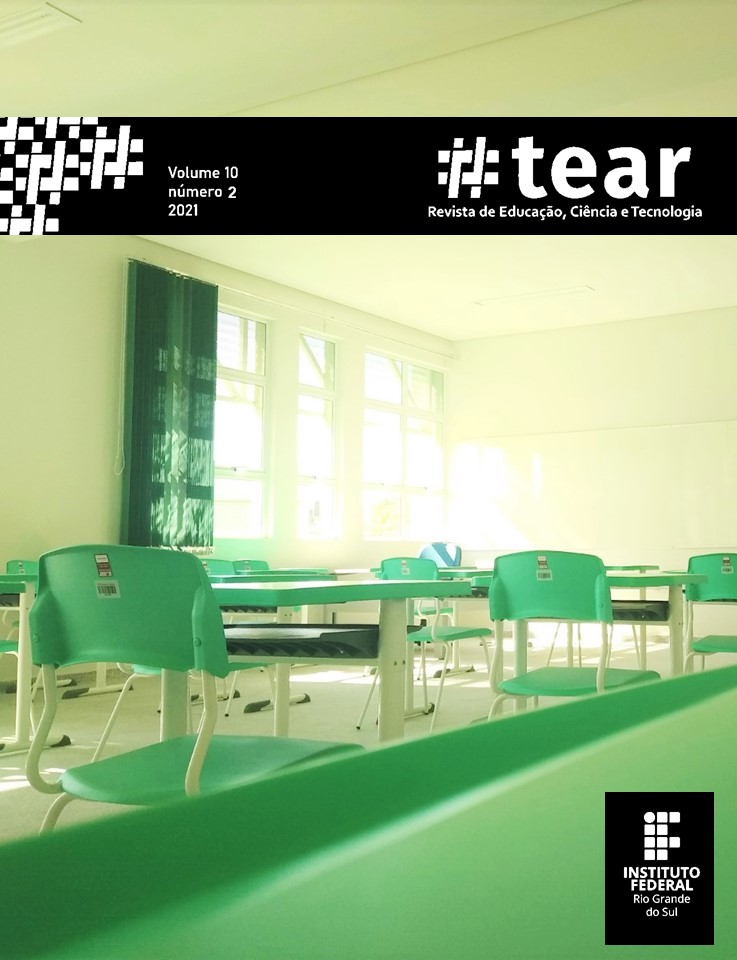
TEACHING LIFE: THE WORLD SEEN THROUGH THE TEACHER'S LENSES
Vol. 10 No. 2 (2021)This special issue aims at disseminating scientific works by national and international researchers in the field of teacher training, which present results on initial and continuing education, vocational development, teachers’ identities, formation process, professionalism, as well as teaching training policies. Among other aspects, we intend to comprehend how individuals’ life trajectories have influenced the choice of occupation, conceptions of teaching & learning and teacher education. The results indicate paths for teachers’ life trajectory, and also influences for their choices, beliefs, decisions making in the classroom context, and, as a consequence, their professional development.
Organizers:
Prof. Dr. Pedro Demo (UnB), Prof. Dr. Renan Antônio da Silva (UNIS) and Prof. Dr. Guy Thomsom (University of Warwick)
Cover art: Photo by Cimara Valim de Melo (2021)
-
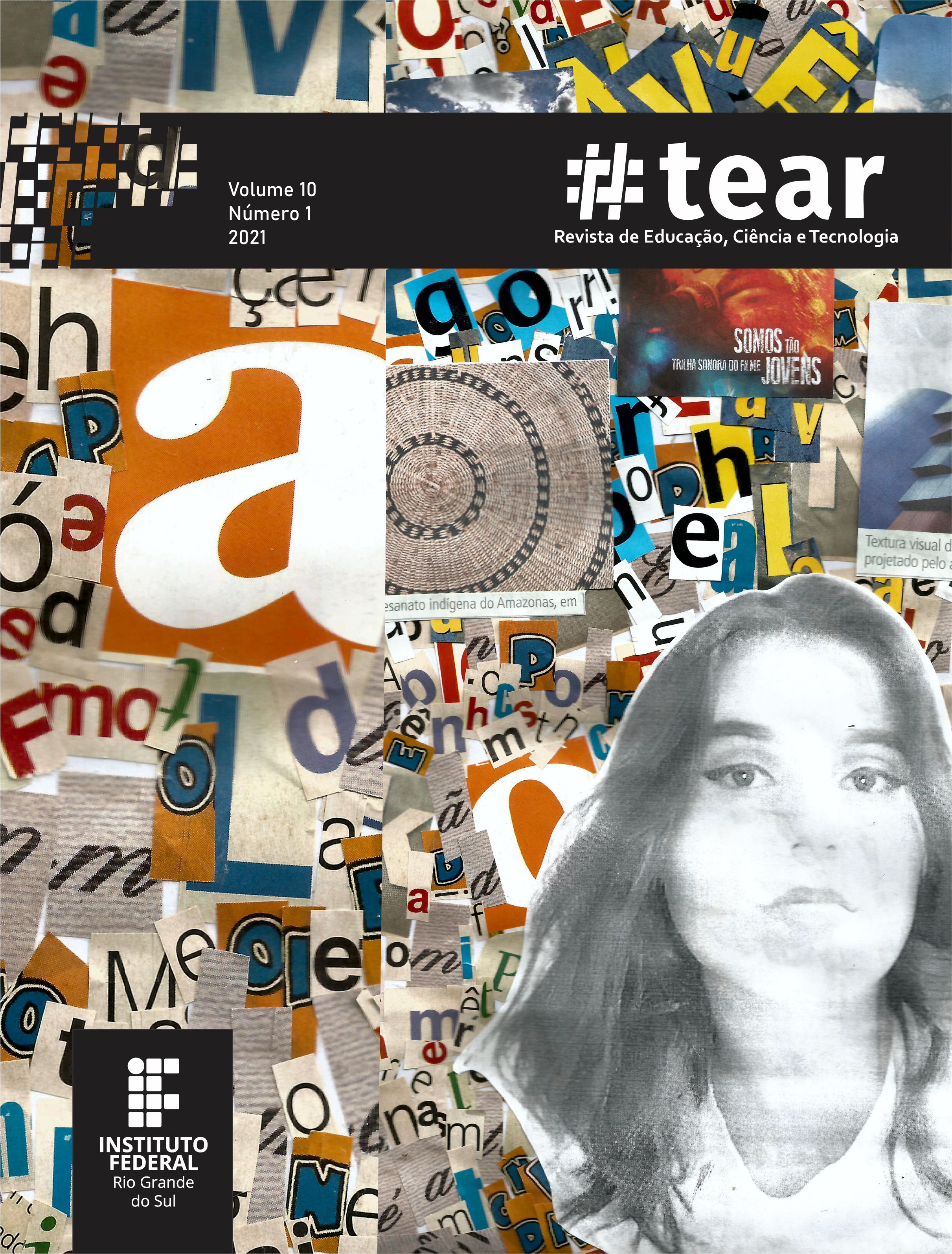
MULTIDIMENSIONAL LITERACY IN THE KNOWLEDGE SOCIETY
Vol. 10 No. 1 (2021)In the 21st century, the dichotomous notion of literacy that, in the past, distinguished between schooled and non-schooled individuals is meaningless. An informed and participatory citizenship in the knowledge society requires a multiplicity of competences that only a broader concept of literacy can encompass. Literacy can currently be seen from the perspective of functional literacy, as it focuses, not on the possession of competences, but rather on the ability to use them in solving problems and in decision-making, in the different areas of life. Every day, we all face an immensity of information (oral, written, numerical and graphic), coming from the most diverse sources and transmitted by a wide variety of means, which it is important to manage. So, everyone, regardless of their academic background, must have the necessary skills to access, process, decode and communicate that information. Intending to contribute to the scientific debate about the multidimensionality of the current concept of literacy and the competencies required for 21st century life, this dossier includes articles related to one or more dimensions of literacy in the knowledge society.
Organizers: Prof. Dr. Carla Maria Lopes da Silva Afonso dos Santos (Universidade Nova de Lisboa, Portugal), Prof. Dr. Cristina Paula da Silva Dias (Universidade Nova de Lisboa, Portugal) and Prof. Dr. Marizete Bortolanza Spessatto (Instituto Federal de Educação, Ciência e Tecnologia de Santa Catarina)
Cover Art:
Artist: Manuella Colling Viegas
Supervision: Juliana da Cruz MüllingTitle: Identity and [in]formation (2020).
Material: sulphite paper. Size dimensions: 210mmX297mm.
Technique: collage. -
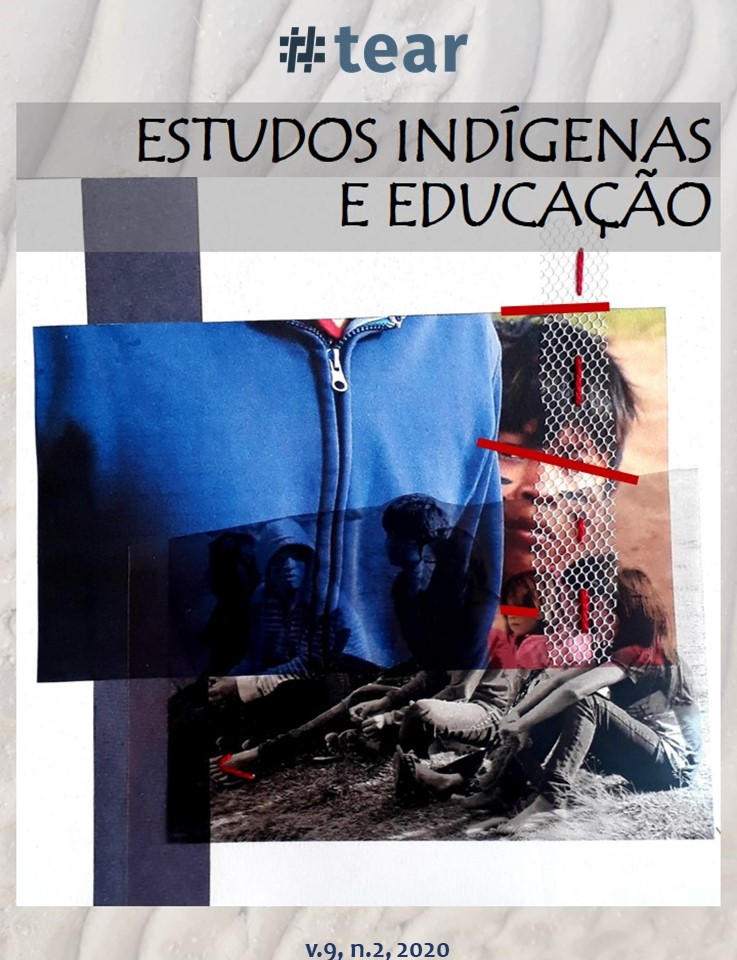
INDIGENOUS STUDIES AND EDUCATION
Vol. 9 No. 2 (2020)Native American studies and different levels and modalities of teaching, such as basic education, higher education, bilingual education, intercultural universities, differentiated degrees, among other forms of the field of Indigenous Education have gained expression for the last decades in Latin America and the Caribbean. New possibilities for life, politics, and curricula extend discussions about non-formal teaching spaces, under which distinct thought systems and intelligibility norms occur. Thus, this special edition aims at reaffirming the commitment to the study of different conceptions of education and indigenous cultures by investigating the intercultural teaching and political settings in order to explore new possible studies. The issue involves works resulting from theoretical and/or empirical research whose themes focus on formal and non-formal educational contexts, covering topics such as basic education, higher education, experiences in popular and intercultural indigenous universities, conceptions of childhood, youth and their learning processes. It intends to articulate research carried out not only in the Brazilian context but in other Amerindian countries for the valorization of indigenous peoples and their cultural diversity.
Organizers: Profa. Dra. Danielle Bastos Lopes (UERJ) and Profa. Dra. María Cecilia Zsögön (UBA).
Cover Art:
Artist: Viviane Diehl
Title: Obliteration: Childhood. 2020. Size dimensions: 18x18x01cm.
Material: Canson paper, acetate, cotton string, acrylic paint, wood.
Technique: photo intervention (photo print, painting, collage, embroidery).
-
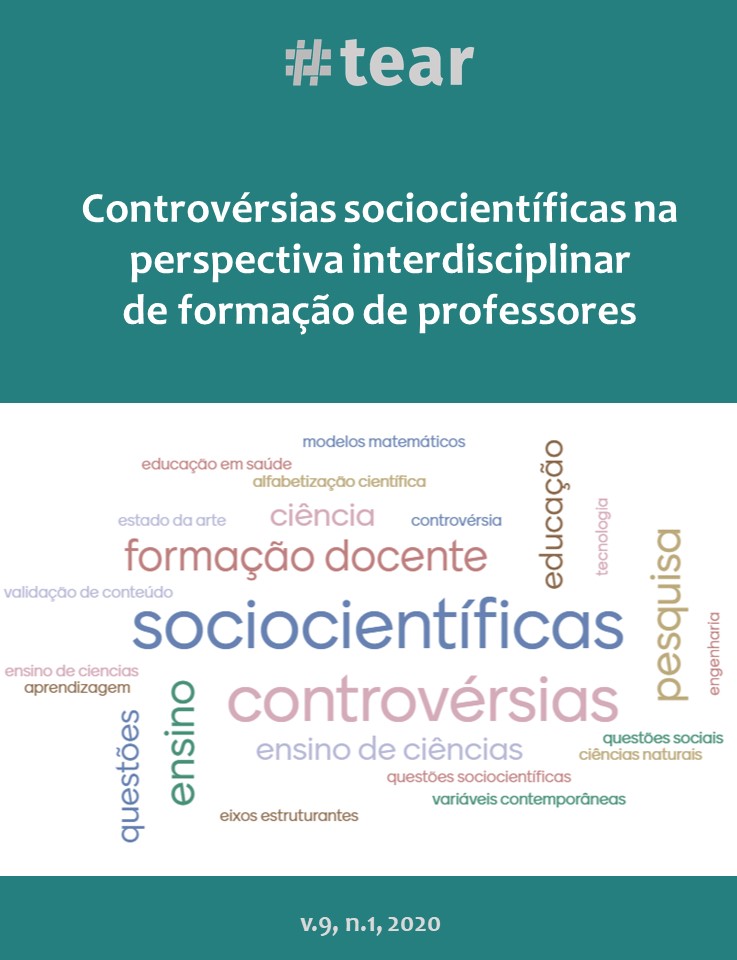
SOCIOSCIENTIFIC CONTROVERSIES ON THE INTERDISCIPLINARY PERSPECTIVE FOR TEACHER TRAINING
Vol. 9 No. 1 (2020)Research on Socioscientific Controversies (SSC) has arisen in the context of a century comprised of scientific and technological unpredicted turns. Its impacts have reached society, mass media, and educational institutions. In addition, scientific and technological education has changed, and new issues have been
discussed in connection to that, both at schools and in different social spaces widely and interdisciplinary. Thus, the Socioscientific Issue approach seems to embody an integrating perspective in education. The SSC involve discussions on social affairs linked to current scientific knowledge, and therefore, seen in mass
media such as radio, TV, newspaper and the Internet. Within this context, this special edition reassures education commitment to social affairs which question teaching and learning processes in an interdisciplinary way, articulating debates and investigations in this direction. Thus, the issue brings together pieces of work resulting from research that merge teacher training and Socioscientific Controversies (SSC) in an interdisciplinar perspective, by encompassing a number of topics from different educational contexts.Organizers: Prof. Dr.José Vicente Lima Robaina (UFRGS), Profa. Dra. Marilisa Bialvo Hoffmann (UFRGS), Prof. Dr. Leandro Duso (UFSC), Prof. Dr. Pedro Reis (Universidade de Lisboa - Portugal) e Prof. Dr. Leonardo Fabio Martínez Pérez (Universidade Pedagógica Nacional - UPN - Colômbia)
-
DIMENSIONS OF INFORMATICS AND SOCIETY
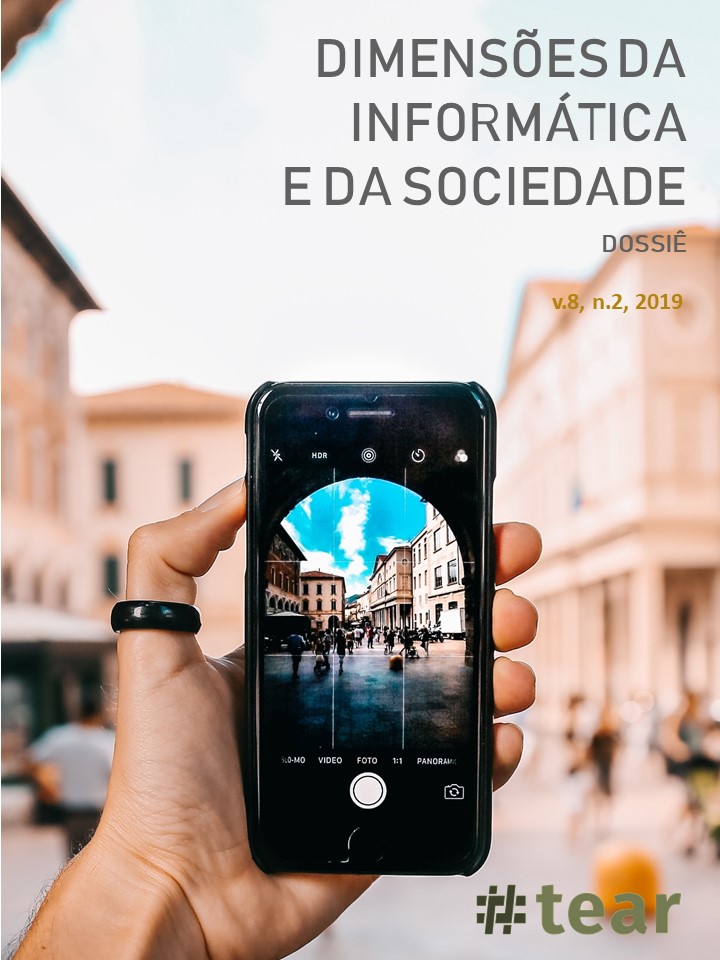
Vol. 8 No. 2 (2019)Since the second half of the 20th century, Informatics has featured prominently in society as it has created new ways of interaction between human beings and machines. From mainframes and ARPANET to personal computadores, smartphones e Internet, artefacts, techniques and ideas in the field of information technology have been progressively incorporated in society, broking and affecting social and cultural relations through stronger links to human subjectivity. Thus, this special edition intends to bring together pieces of research concerned with different dimensions of informatics and society, by arousing critical and innovative discussions and dialogues on their educational, social, cultural and political aspects. The issue is comprised of scientific works focused on educational experiences and historical perspectives of computer technologies, as well as the ones involving digital inclusion, the world of work, the maker and hacker culture, ethical and political aspects on social media.
Prof. Dr. Marcelo Vianna (IFRS, Unisinos)
Prof. Dr. Lucas de Almeida Pereira (IFSP)
OrganizersCover: Photo by Oleg Magni from Pexels
-
MOVIMENTOS SOCIAIS, EDUCAÇÃO POPULAR E UTOPIAS
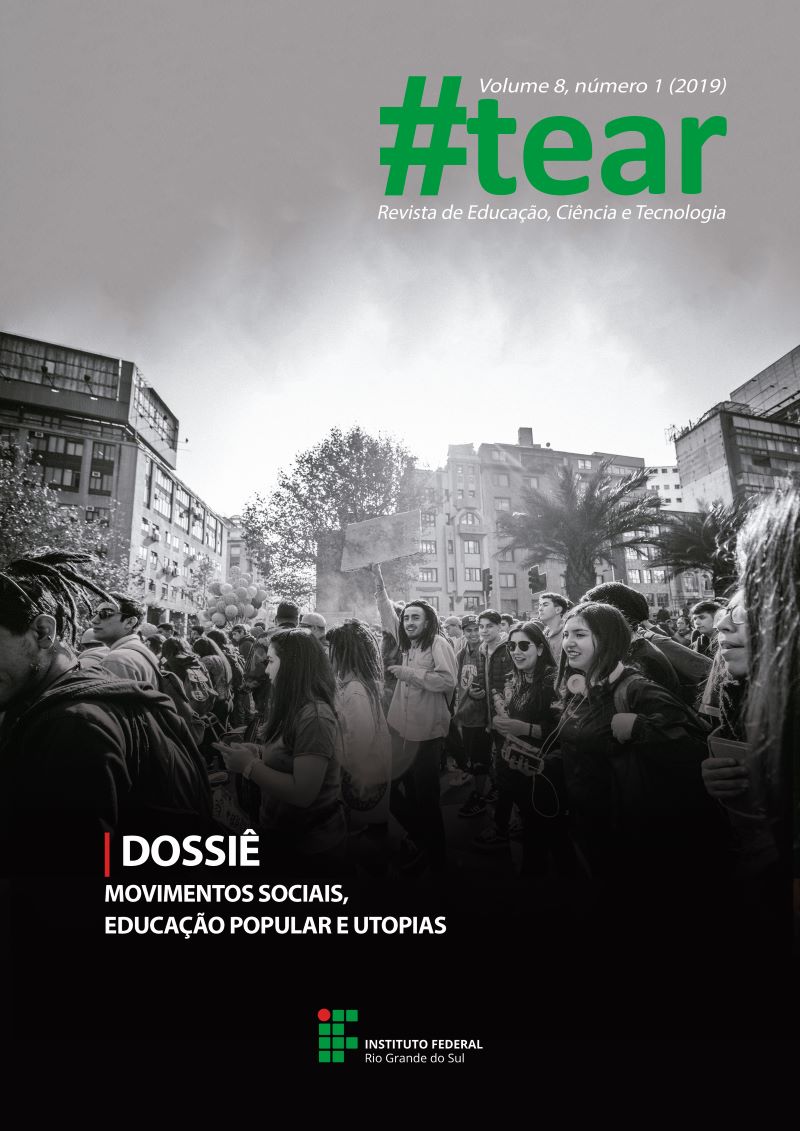
Vol. 8 No. 1 (2019)Dossiê: Movimentos sociais, Educação Popular e Utopias
As utopias, em sua perspectiva freireana, são modos de estar-sendo-no-mundo que exigem a produção estética e ética do conhecer-existir. A construção do conhecimento é a possibilidade de projetar e buscar no imaginado as redes de significados da existência. É nas utopias que demarcamos a educação popular e as mobilizações e movimentos sociais como lócus privilegiado de pesquisa. Este dossiê busca, assim, reafirmar o compromisso com os que vivem em condição de subalternidade, articulando debates e pesquisas desenvolvidas nesse bojo. Desse modo, presente dossiê contempla trabalhos resultantes de pesquisas teóricas e/ou empíricas cujas temáticas giram em torno de contextos educativos formais e não formais, oportunizando reflexões sobre educação popular, relações étnico-raciais e de gênero.
Profa. Dra. Amanda Motta Castro (FURGS)
Profa. Dra. Elisa Gonsalves Possebon (UFPB)
Prof. Dr. Marcio Caetano (FURG)
OrganizadoresDossier: Social Movements, Popular Education and Utopy
According to Paulo Freire’s perspective, utopies are ways of being-in-the-world, which require the ethical and aesthetic production of ‘knowing-exist’. The construction of knowledge is the possibility of projecting and seeking in the imagined world a network of meanings. Through utopies, popular education, social movements and mobilizations have been set as a prime research locus. Thus, this special edition aims to re-ensure the commitment to the ones who live in subaltern conditions, bringing together debates and studies carried out within this scope. As a result, it brings together pieces of work resulting from theoretical and empirical research, whose topics revolve around formal and informal educational contexts, giving oportunity to reflections on popular education, racial-ethnic and gender relations.
Prof Dr Amanda Motta Castro (FURGS)
Prof Dr Elisa Gonsalves Possebon (UFPB)
Prof Dr Marcio Caetano (FURG)
OrganizersDossier: Movimientos Sociales, Educación Popular y Utopías
Las utopías, en su perspectiva freireana, son modos de estar-siendo-en el-mundo que exigen la producción estética y ética del “conocer-existir”. La construcción del conocimiento es la posibilidad de proyectar y buscar en el imaginado las redes de significados de la existencia. Es en las utopías que demarcamos la educación popular y las movilizaciones y movimientos sociales como locus privilegiado de investigación. Este dosier busca, así, reafirmar el compromiso con los que viven en condición de subalternidad, articulando debates e investigaciones desarrolladas en ese seguimiento. De ese modo, el dosier contempla trabajos resultantes de investigaciones teóricas y / o empíricas cuyos temas giran alrededor de contextos educativos formales y no formales, ofreciendo reflexiones sobre la educación popular, las relaciones étnico-raciales y el género.
Profa. Dra. Amanda Motta Castro (FURGS)
Profa. Dra. Elisa Gonsalves Possebon (UFPB)
Prof. Dr. Marcio Caetano (FURG)
Organizadores....
Design da capa: Tiago Caon Ribeiro
-
ENSINO DE CIÊNCIAS
Vol. 7 No. 2 (2018)Dossiê: Ensino de Ciências
O presente dossiê tem em suas bases as discussões suscitadas pelo II Encontro Regional de Ensino de Ciências (UFRGS/FURG/UFSM/UNIPAMPA), cujo objetivo foi provocar a reflexão acerca de temas relativos à formação de professores e ao ensino em ciências. A diversidade de resultados gerados por estudos apresentados no evento abrange os seguintes temas: processos de ensino e aprendizagem em espaços formais e não formais, produção científica e avaliação de produtividade em ciências, implicações das práticas científicas na constituição dos sujeitos, bem como tecnologias educativas no processo de aprendizagem. A partir deles, abre-se um leque de conteúdos produzidos para o campo da educação e do ensino de ciências, entre os quais estão formação de professores nos diferentes níveis de ensino; processos e técnicas de ensino-aprendizagem nos mais variados ambientes, formais e não formais; ciência e perspectivas epistemológicas, incluindo filosofia, história, enfoque CTS/CTSA, alfabetização científica, saberes populares e interdisciplinaridade; aplicação de recursos para ensino-aprendizagem de ciências; questões políticas e socioculturais em ciências, envolvendo gênero, sexualidade, inclusão social, meio ambiente e políticas públicas; produção científica, com enfoque em análise e avaliação de produtividade em ciência. A partir dos temas e conteúdos elencados, a #Tear: Revista de Educação, Ciência e Tecnologia, em parceria com Programa de Pós-Graduação Educação em Ciências: Química da Vida e Saúde (PPGEC), da Universidade Federal do Rio Grande do Sul (UFRGS), espera trazer para o debate diferentes olhares acerca do Ensino de Ciências.
Profa. Dra. Denise de Castro Bertagnolli (UFF)
Prof. Dr. Edson Lindner (UFRGS)
Profa. Dra. Maria do Rocio Fontoura Teixeira (UFRGS)
OrganizadoresDossier: Science Teaching
The current issue is based on the discussions raised by the II Regional Meeting of Science Teaching (UFRGS/FURG/UFSM/UNIPAMPA), which aimed to encourage thought on teacher training and science education. The variety of results generated by the studies presented at the event covers the following topics: teaching and learning processes in formal and non-formal environments, scientific production and productivity evaluation in sciences, implications of scientific practices in the constitution of the subject, as well as educational technology in learning process. From them, a wide range of contents have come up in the field of education and science teaching, such as teacher training at different levels of education; teaching-learning processes and techniques in different environments, both formal and non-formal; science and epistemological perspectives, including philosophy, history, CTS / CTSA approach, scientific literacy, popular knowledge and interdisciplinarity; use of resources for science teaching and learning; political and socio-cultural issues in science, involving gender, sexuality, social inclusion, environment and public policies; scientific production, focusing on productivity analysis and evaluation in science. Having the topics and contents mentioned as a basis, #Tear: Journal of Education, Science and Technology, in collaboration with the Postgraduate Program in Science Education: Chemistry of Life and Health (PPGEC) at the Federal University of Rio Grande do Sul (UFRGS), expects to contribute to different insights on Science Teaching”.
Profa. Dra. Denise de Castro Bertagnolli (UFF)
Prof. Dr. Edson Lindner (UFRGS)
Profa. Dra. Maria do Rocio Fontoura Teixeira (UFRGS)
OrganizersDossier: Enseñanza de Ciencias
El presente expediente tiene su base en las discusiones suscitadas por el II Encuentro Regional de Enseñanza de Ciencias (UFRGS/FURG/UFSM/UNIPAMPA), cuyo objetivo fue provocar la reflexión acerca de temas relativos a la formación de profesores y a la enseñanza en ciencias. La diversidad de resultados generados por estudios presentados en el evento abarca los siguientes temas: procesos de enseñanza y aprendizaje en espacios formales y no formales, producción científica y evaluación de productividad en ciencias, implicaciones de las prácticas científicas en la constitución de los sujetos, así como las tecnologías educativas en el proceso de aprendizaje. A partir de ellos, se abre una variedad de contenidos producidos para el campo de la educación y de la enseñanza de ciencias, entre los cuales están formación de profesores en los diferentes niveles de enseñanza; procesos y técnicas de enseñanza-aprendizaje en los más variados ambientes, formales y no formales; ciencia y perspectivas epistemológicas, incluyendo filosofía, historia, enfoque CTS / CTSA, alfabetización científica, saberes populares e interdisciplinariedad; aplicación y uso de recursos para enseñanza-aprendizaje de ciencias; cuestiones políticas y socioculturales en ciencias, involucrando género, sexualidad, inclusión social, medio ambiente y políticas públicas; producción científica, con énfasis en análisis y evaluación de productividad en ciencia. A partir de los temas y contenidos enumerados, a #Tear: Revista de Educación, Ciencia y Tecnología, en asociación con Programa de Postgrado Educación en Ciencias: Química de la Vida y Salud (PPGEC), de la Universidad Federal de Rio Grande do Sul (UFRGS), espera traer para el debate diferentes miradas acerca de la Enseñanza de Ciencias.
Profa. Dra. Denise de Castro Bertagnolli (UFF)
Prof. Dr. Edson Lindner (UFRGS)
Profa. Dra. Maria do Rocio Fontoura Teixeira (UFRGS)
Organizadores.....
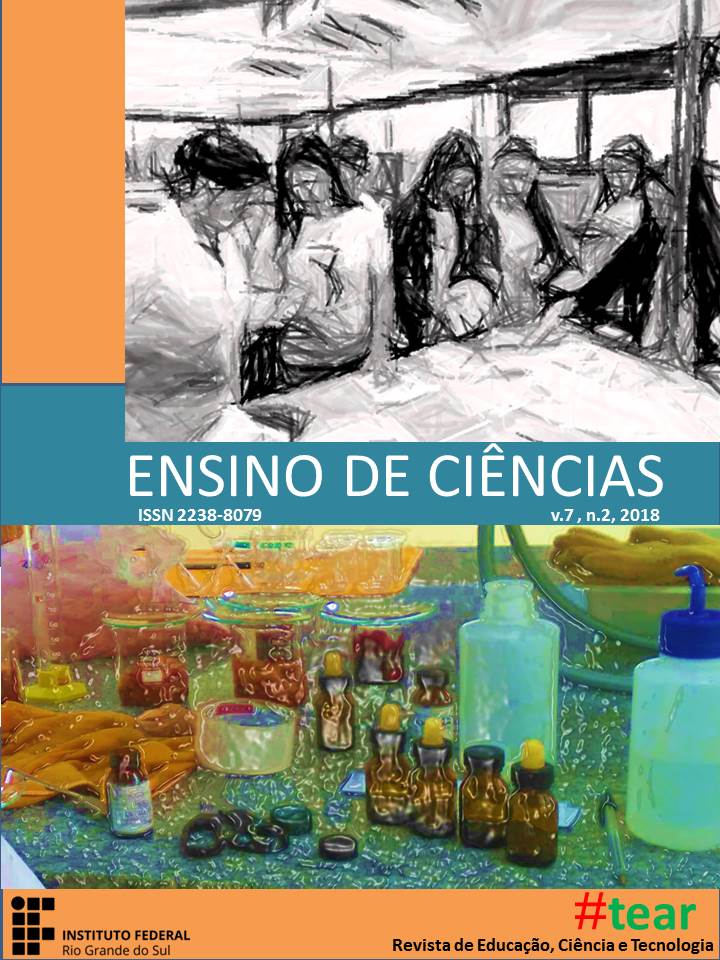
Capa: Criação da educadorartista Viviane Diehl (IFRS - Campus Feliz) com imagens que registram atividades do projeto de ensino "Artistando Quimicamente". Propõe a transdisciplinaridade com Arte e Química, tendo a colaboração da estudante bolsista Jaqueline Rucks, do curso Técnico em Química integrado ao Ensino Médio.
-
EDUCAÇÃO E TECNOLOGIA
Vol. 7 No. 1 (2018)Dossiê: Educação e Tecnologia
O mundo vive um processo de grande transformação tecnológica. O uso de tecnologias digitais permeia todo fazer humano, desde o lazer até o trabalho. Isso porque a Internet permitiu o desenvolvimento das mais variadas redes sociais, criando uma geração que tem nos seus dispositivos digitais uma forma de conectar-se ao mundo. Embora muitas pesquisas sejam realizadas com o intuito de levar essa verdadeira revolução para a sala de aula, ainda há muito o que ser feito com vistas à construção de uma educação que se beneficie do fenômeno tecnológico vivido na contemporaneidade. Assim, no presente dossiê, a #Tear: Revista de Educação, Ciência e Tecnologia espera fomentar a divulgação de experiências investigativas a respeito do uso de tecnologias digitais na educação.
Prof. Dr. Marcelo Augusto Rauh Schmitt (IFRS)
Profa. Dra. Liane Margarida Rockenbach Tarouco (UFRGS)
OrganizadoresDossier: Education and Technology
The world lives a process of great technological changes. The use of digital technologies prevails in every human action, from leisure to work. This is because the Internet has enabled the development of a number of social networking, by creating a generation in which digital devices are seen as a way of connecting to the world. Although extensive research has been carried out in order to put together technological revolution and teaching, there is a lot to be done for the development of educational approaches which take advantage of contemporary technologies. Thus, #Tear: Journal of Education, Science and Technology, in this number, expects to foster the dissemination of research regarding the use of digital technologies.
Prof. Dr. Marcelo Augusto Rauh Schmitt (IFRS)
Profa. Dra. Liane Margarida Rockenbach Tarouco (UFRGS)
OrganizersDossier: Educación y tecnología
El mundo vive un proceso de gran transformación tecnológica. El uso de tecnologías digitales permea todo el hacer humano, desde el ocio hasta el trabajo. Esto porque Internet ha permitido el desarrollo de las más variadas redes sociales, creando una generación que tiene en sus dispositivos digitales una forma de conectarse al mundo. Aunque muchas investigaciones se realicen con el propósito de llevar esa verdadera revolución al salón de clases, aún queda mucho por hacer con vistas a la construcción de una educación que se beneficie del fenómeno tecnológico vivido en la contemporaneidad. Por lo tanto, la #Tear: Revista de Educación, Ciencia y Tecnología, en el presente expediente, espera fomentar la divulgación de experiencias investigativas acerca del uso de tecnologías digitales en la educación.
Prof. Dr. Marcelo Augusto Rauh Schmitt (IFRS)
Profa. Dra. Liane Margarida Rockenbach Tarouco (UFRGS)
Organizadores....
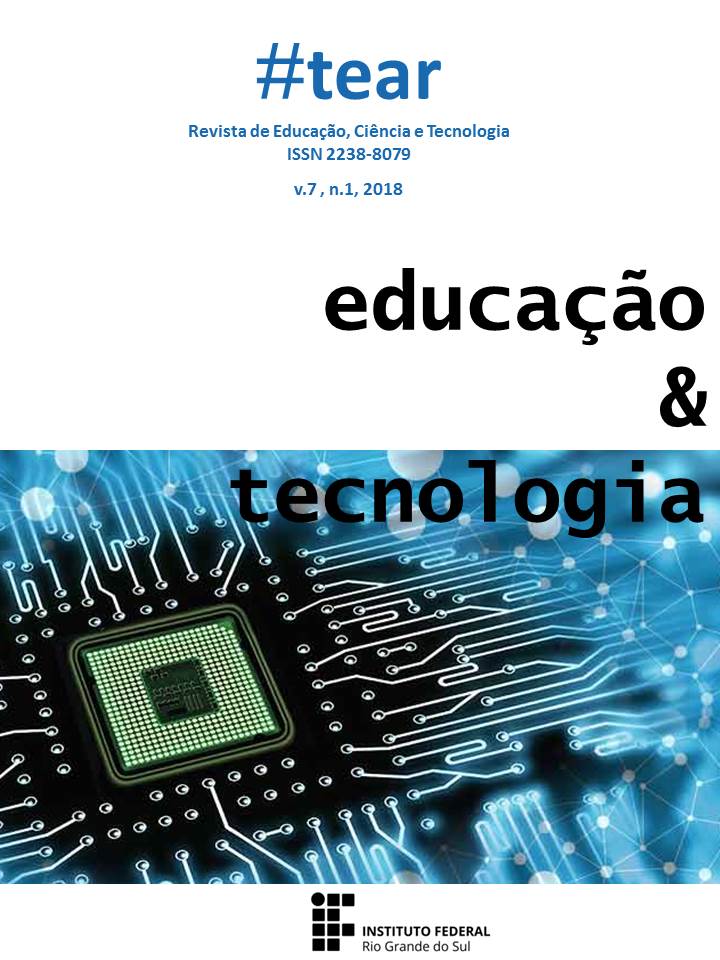
Imagem de capa: Siliconreview Team
-
EDUCAÇÃO, DESENVOLVIMENTO E MEIO AMBIENTE
Vol. 6 No. 2 (2017)Dossiê: Educação, Desenvolvimento e Meio Ambiente
O desempenho da educação é um dos principais indicadores de desenvolvimento na atualidade. Os índices que buscam mensurar os diferentes níveis de desenvolvimento entre cidades, regiões, territórios ou nações têm observado a formação e a qualificação de professores; o número de anos cursados pelos estudantes; a relação e o envolvimento de cursos com o mundo do trabalho, as tecnologias e a inovação. Da mesma forma, nas últimas décadas, as questões ambientais têm assumido papel de destaque para a compreensão do tema do desenvolvimento. O acesso à água potável e à coleta de resíduos sólidos, a produção de alimentos com ética social e ambiental, a preservação dos recursos naturais e o saber das populações tradicionais constituem algumas das questões que revelam uma nova maneira de compreender amplamente a ideia de desenvolvimento em suas mais variadas dimensões. Neste número da #Tear: Revista de Educação, Ciência e Tecnologia, pretende-se trazer para o debate novosa olhares sobre o desenvolvimento, considerando diferentes maneiras de fazer educação e de compreensão do meio ambiente.
Prof. Dr. Leonardo Beroldt (UERGS)
Prof. Dr. Marcos Daniel Schmidt de Aguiar (IFRS)
OrganizadoresDossier: Education, Development and Environment
Education performance is one of the main indicators of development nowadays. The indexes that seek to measure the different levels between cities, regions, territories or nations observe more and more teachers’ training and qualification; the amount of years students spend at school; and the relationship and involvement of courses with the working world, technology and innovation. Similarly, in the last decades, environmental issues have taken a central role for understanding development. The access to drinking water and solid waste collection, food production with social and environmental ethics, the preservation of natural resources and the knowledge of traditional populations are some of the issues which reveal a new way to broadly understand the idea of development in its various dimensions. In this number, #Tear: Journal of Education, Science and Technology aims to bring to the debate new insights at development, considering different ways of making education and understanding of the environment.
Prof. Dr. Leonardo Beroldt (UERGS)
Prof. Dr. Marcos Daniel Schmidt de Aguiar (IFRS)
OrganizersDossier: Educación, Desarrollo y Medio Ambiente
El desempeño de la educación es actualmente uno de los prinicpales indicadores del desarrollo. Los índices que tratan de sintetizar los diferentes niveles entre ciudades, regiones, territorios o naciones observan cada vez más las posibilidades de formación, instrucción y capacitación de los profesores; la cantidad de años de estudio de los alumnos; la relación y el compromiso de los cursos con el mundo del trabajo, la tecnología y la innovación. Del mismo modo, en las últimas décadas los temas ambientales han asumido un papel preponderante en la comprensión del tema del desarrollo. El acceso al agua potable y la recolección de desechos sólidos, la producción de alimentos con ética social y ambiental, la conservación de los recursos naturales y la sabiduría de las poblaciones tradicionales son algunas de las cuestiones que revelan una manera nueva y ampliada de entender el concepto de desarrollo en sus diversas dimensiones. En este número de #Tear: Revista de Educacão, Ciência e Tecnologia, se pretende ofrecer para el debate nuevas miradas el desarrollo, teniendo en cuenta formas diversas de educar y comprender el medio ambiente.
Prof. Dr. Leonardo Beroldt (UERGS)
Prof. Dr. Marcos Daniel Schmidt de Aguiar (IFRS)
Organizadores....
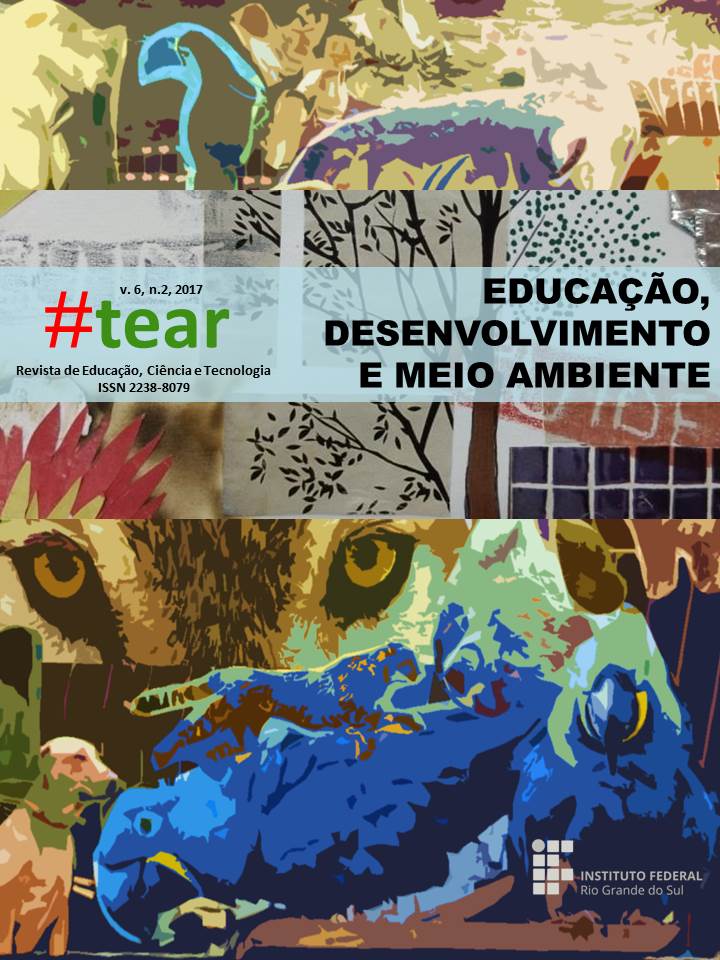
Capa: Elaborada pela educadorartista Viviane Diehl e composta por imagens de produções de Graziele Bach e Bruna Brunetto, alunas do segundo ano do curso Técnico em Química Integrado ao Ensino Médio (IFRS - Campus Feliz).
-
INCLUSÃO DIGITAL
Vol. 6 No. 1 (2017)Dossiê: Inclusão Digital
Ser usuário das tecnologias digitais como condição de inserção nos modos de viver na atualidade traz à tona a discussão acerca da inclusão digital. Provavelmente o mais adequado seja falarmos em gradientes de inclusão digital, uma vez que o amparo no binarismo incluído/excluído parece não fazer sentido. É pouco coerente rotularmos como excluído digital quem não se utiliza das tecnologias para estabelecer relações sociais, fazer transações bancárias, compras, entre outras atividades, mas faz uso de tais artefatos para trabalhar e se comunicar. Talvez seja também incoerente classificarmos como incluído digital aquele que tem acesso às tecnologias em rede somente por meio da instituição de ensino, da lan-house, ou do trabalho. Com isso, buscamos argumentar que nossa condição é ora de incluído, ora de excluído digital, e, dessa maneira, o termo in/exclusão digital parece soar mais apropriado para se fazer referência ao acesso às tecnologias digitais. Verificamos um contínuo do totalmente incluído ao totalmente excluído, com inúmeras posições intermediárias, revelando um cenário complexo, digno de aprofundamento científico. A partir do exposto, o presente dossiê tem um duplo objetivo: fomentar a discussão acerca do tema e reunir pesquisadores interessados em problematizar a questão da inclusão digital na educação.
Profa. Dra. Carine Loureiro (IFRS)
Prof. Dr. Milton Shintaku (IBICT)
OrganizadoresDossier: Digital Inclusion
Being a user of digital technologies as a condition of entering in the ways of living nowadays brings to light the discussion regarding digital inclusion. Perhaps it is more suitable to be talking about gradients of digital inclusion, once the binary opposition included/excluded seems not to make sense anymore. It is not coherent to label as digital excluded the one who doesn’t use the technology to establish social relations, make bank transactions, buy a product, or do other activities, but uses those artefacts to work and communicate. Likewise, it might be incoherent to classify as digital included the one who has access to network technologies only through educational institutions, lan-houses, or workplace. With regard to that, we argue that our status is of either digitalincluded or digital excluded and hence the term digital in/exclusion seems to sound more appropriate to refer to the access to digital technologies. It is possible to observe a continuous from completely included to completely excluded, with numerous intermediate positions, revealing a complex scenario, worthy of further scientific research. Therefore, the current dossier has a dual purpose: encouraging discussion concerning this topic, and putting researchers together to problematize the idea of digital inclusion in education.
Prof. Dr. Carine Loureiro (IFRS)
Prof. Dr. Milton Shintaku (IBICIT)
OrganizersDossier: Inclusión Digital
Ser un usuario de tecnologías digitales como condición para entrar en los modos de vivir en la actualidad abre el debate sobre la inclusión digital. Quizás lo más adecuado sea referirnos a grados de inclusión digital, una vez que basarse en la lógica binaria de la inclusión o exclusión, a priori, no parece tener sentido. Es poco coherente que etiquetemos como excluido digital a quien no utiliza tecnologías para establecer relaciones sociales, hacer transacciones bancarias, compras, entre otras actividades, pero sí las utiliza para trabajar y comunicarse. De la misma forma, tal vez sea incoherente que clasifiquemos como incluido digitalmente a quien tiene acceso a tecnologías en red solo por medio de instituciones de enseñanzas, de cibercafés o del trabajo. Con eso, buscamos argumentar que nuestra condición puede variar entre la inclusión y la exclusión y, de esa manera, el termino in/exclusión parece sonar más apropiado para referirse al acceso a las tecnologías digitales. Es posible verificar una continua de totalmente incluido a totalmente excluido, con numerosas posiciones intermedias, revelando un complejo escenario, digno de estudio científico. A partir de lo expuesto, este dossier tiene un objetivo doble: fomentar la discusión sobre el tema e reunir investigadores a problematizar la cuestión de la inclusión digital en la educación.
Prof. Dr. Carine Loureiro (IFRS)
Prof. Dr. Milton Shintaku (IBICIT)
Organizadores
...
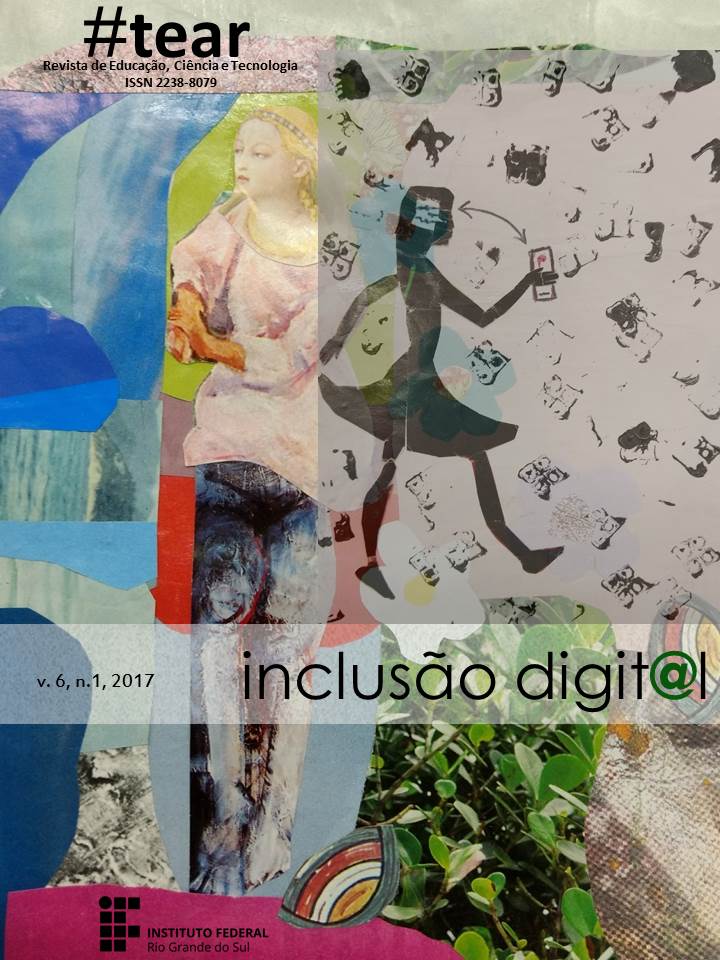
Capa: Criada pela educadorartista Viviane Diehl com a colaboração de imagens da arte postal de Natália Ledur Fenner, aluna do curso Técnico em Química integrado ao Ensino Médio, e de Thomas Schneider Wiederkehr, aluno do curso Técnico em Informática integrado ao Ensino Médio, no IFRS - Campus Feliz. A produção de Arte Postal integra a exposição Eksperimenta! 2017, em Tallin, na Estônia. -
ARTE E EDUCAÇÃO
Vol. 5 No. 2 (2016)Dossiê: Arte e Educação
Arte e educação possuem uma relação histórica, cuja convivência sempre foi mediada por um constante debate da intervenção dessas duas áreas na arena social e de como se relacionam. As discussões em torno da convivência de ambas estão em grande parte relacionadas ao seu processo de democratização e às possibilidades de transformação que elas são capazes de produzir. Se, por um lado, podemos falar no papel educativo da arte, é possível igualmente sinalizarmos para o potencial criador doprocesso de ensino e aprendizagem. A formação e a atuação nos territórios da arte e da educação movimentam todos os envolvidos, os quais compartilham da cultura, que coloca em discussão e expansão contínua as problematizações emergentes. Desse modo, o dossiê “Artee Educação” pretende absorver abordagens sobre o assunto,que incluem reflexões sobre a importância da criatividade na formação do indivíduo; a arte como instrumento reflexivo; arte, educação e a democratização do conhecimento; a história da arte e da educação no Brasil; a dimensão política da confluência entre arte e educaçãocomo uma estratégia de ensino e aprendizagem; a formação educativa no território da arte; a relação entre estética e as diversas áreas de ensino; políticas de inclusão curricular de arte na educação; o espaço da arte como de aprendizado para aluno e professor; a disposição criativa do professor e a disposição didática do artista; entre outras.
Dra. Viviane Diehl (UFSM, IFRS)
Dr. Gaudêncio Fidelis (SUNY)
OrganizadoresDossier: Art and Education
The arts and education have a historical relationship, whose existence has always been mediated by a constant debate in regards of the intervention between those two areas in the social scene and their relations. The discussions around the coexistence of both are greatly connected to their process of democratization and the possibilities of transformation they are able to produce. If, on the one hand, we can talk in the educational role of the arts, on the other hand it is possible to highlight the creative potential of teaching and learning processes. Education and practice in the territories of the arts and education move all the involved ones, as they share culture, which places the emerging problematization into discussion and continuous expansion. Thus, the dossier "The Arts and Education" intends to gather a different approaches on the topic, which include reflections on the importance of creativity in personal development; the arts as an instrument of reflection; the arts, education, and the democratization of knowledge; the history of the arts and education in Brazil; the political dimension of the confluence between the arts and education as a learning and teaching strategy; the educational training in the field of the arts; the relationship between aesthetics and the various areas of education; curricular policies for inclusion of the arts in education; the space of the arts as a learning place for students and teachers; the teacher’s creative role, and the artist’s didactic role; and other ones.
Dr. Viviane Diehl (UFSM, IFRS)
Dr. Gaudêncio Fidelis (SUNY)
OrganizersDossier: Arte y Educación
El arte y la educación tienen una relación histórica, cuya existencia siempre estuvo mediada por un debate constante sobre la intervención de estas dos áreas en el escenario social y cómo se relacionan. Los debates en torno a la coexistencia de ambas están en gran parte relacionadas con su proceso de democratización y con las posibilidades de transformación que son capaces de producir. Si, por un lado, podemos hablar de la función educativa del arte, por el otro también es posible enfocarnos para el potencial creativo del proceso de enseñanza y aprendizaje. La formación y la actuación en los territorios del arte y de la educación mueven a todos los involucrados, los cuales comparten la cultura que discute y expande continuamente las problematizaciones emergentes. De esa forma, el dossier “Arte y Educación” pretende absorber perspectivas sobre el asunto, que incluyan reflexiones sobre la importancia de la creatividad en la formación del individuo; el arte como instrumento reflexivo; el arte, la educación y la democratización del conocimiento; la historia del arte y de la educación en Brasil; la dimensión política de la confluencia entre arte y educación como estrategia de enseñanza y aprendizaje; la formación educativa en el territorio del arte; la relación entre estética y las diversas áreas de enseñanza; políticas de inclusión curricular del arte en la educación; el espacio del artecomo aprendizaje para alumno y profesor; la disposición creativa del profesor y la disposición didáctica del artista; entre otras.
Dr. Viviane Diehl (UFSM, IFRS)
Dr. Gaudêncio Fidelis (SUNY)
Organizadores....
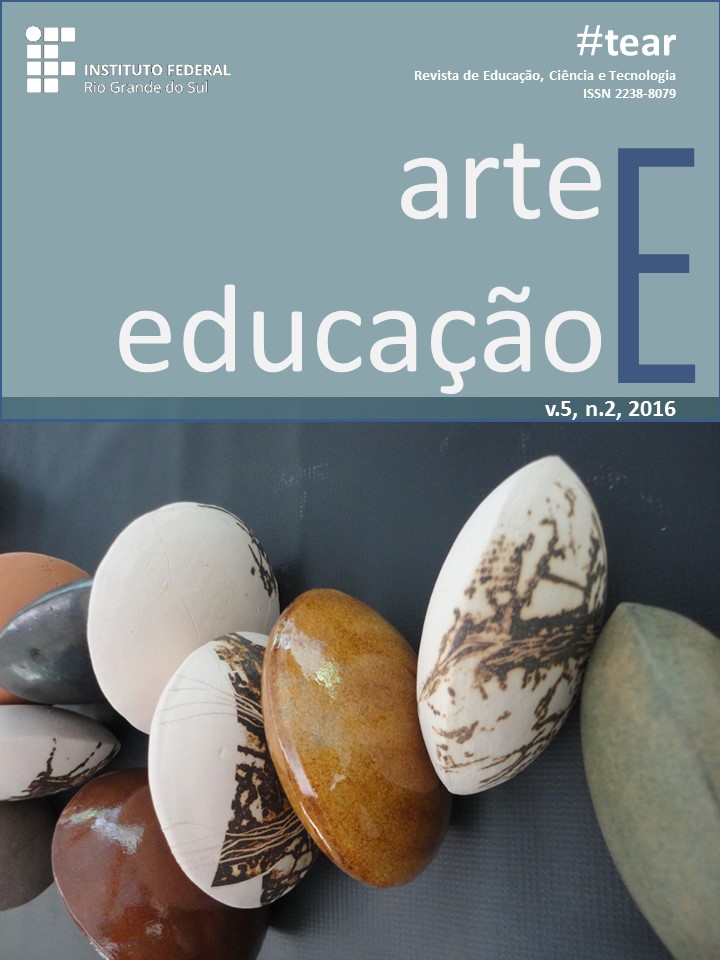
Imagem da capa: Encontros, Viviane Diehl, 2015
Cerâmica com tratamento gráfico (serigrafia) -
INOVAÇÕES TECNOLÓGICAS EM EDUCAÇÃO DE CIÊNCIAS DA NATUREZA E MATEMÁTICA
Vol. 5 No. 1 (2016)Dossiê: Inovações Tecnológicas em Educação de Ciências da Natureza e Matemática
O estudo e a prática ética dos mecanismos de ensino e aprendizagem com o objetivo de facilitar os processos através da inovação são fundamentais nos avanços da Educação de Ciências da Natureza e Matemática. Recentes pesquisas apontam que a escolha de mídias adequadas proporciona uma melhor performance das atividades educacionais, sobretudo em áreas como essas, que exigem profunda abstração. A #Tear: Revista de Educação, Ciência e Tecnologia busca compilar, na presente chamada, trabalhos que abordem tópicos em educação de ciências da natureza, matemática e suas tecnologias, promovendo a difusão dos resultados de pesquisas obtidos pela comunidade acadêmica.
Profa. Dra. Priscila Azevedo da Silveira (IFRS)
Prof. Dr. Esequia Sauter (UFRGS)
OrganizadoresDossier: Technological Innovations in Natural Sciences and Mathematics Education
The study and the ethical practice of teaching and learning for the facilitation of processes through innovation are essential for the advances in education of Natural Sciences and Mathematics. Current research findings show that the appropriate media bring as a result a better performance in educational activities, especially in the fields mentioned above as they require abstraction. Thus, in its current call for papers, #Tear: Revista de Educação, Ciência e Tecnologia intends to address topics in education of Natural Sciences and Mathematics, as well as their Technologies, promoting the dissemination of the research carried out by the academic community.
Prof. Dr. Priscila Azevedo da Silveira (IFRS)
Prof. Dr. Esequia Sauter (UFRGS)
OrganizersDossier: Innovaciones Tecnológicas en Ciencias Naturales y Matemáticas
El estudio y la práctica ética de los mecanismos de enseñanza y aprendizaje con el fin de facilitar los procesos a través de la innovación son fundamentales en los avances de la Educación en Ciencias de la Naturaleza y Matemáticas . Investigaciones recientes indican que la elección de los medios de comunicación apropiados proporciona un mejor rendimiento de las actividades educativas , especialmente en áreas como esas , que requieren la abstracción profunda . La #Tear : Revista de Educación , Ciencia y Tecnología busca compilar en la presente convocatoria ,trabajos que aborden temas de Educación en ciencias de la naturaleza , matemáticas y tecnologías, promoviendo la difusión de los resultados de investigaciones obtenidos por la comunidad académica.
Prof. Dr. Priscila Azevedo da Silveira (IFRS)
Prof. Dr. Esequia Sauter (UFRGS)
Organizadores -
FORMAÇÃO DOCENTE
Vol. 4 No. 2 (2015)Dossiê: Formação Docente
As instituições de ensino de hoje, bastante complexas, situam-se num cenário de diversidade, de fragilidades e em constante transformação, o que tem reflexos na sua identidade, na revisão das suas funções e em novos acordos e colaborações com a sociedade, sustentados em diferenças culturais, econômicas, políticas e sociais da contemporaneidade. Nesse sentido, a formação de professores constitui-se como oportunidade e importante desafio, na medida em que precisa estar contextualizada às rupturas epistemológicas e conceituais que a prática profissional impõe permanentemente. Diante desse contexto, a #Tear: Revista de Educação, Ciência e Tecnologia propõe, no presente dossiê, promover a reflexão, de forma dialética e não linear, acerca da formação dos professores, das suas realidades e oportunidades situadas em diferentes contextos contemporâneos.
Profa. Dra. Gisele Palma (IFRS)
Profa. Dra. Teresa Pessoa (Universidade de Coimbra)
OrganizadoresDossier: Teacher Training
Teaching institutions have become more complex nowadays, as they are located in a scenario of diversity as well as weaknesses in permanent process of becoming. As a consequence, that reality brings some reflections to their identity, the review of their roles, and new agreements and colaborations with society, based on cultural, economic, political and social differences in the contemporary world. Thus, teacher education can be seen as both, an oportunity and a challenge, as it must be contextualised to epistemological and conceptual ruptures, which are permanently required by professional practice. In face of this context, the journal #Tear: Revista de Educação, Ciência e Tecnologia intends to promote dialetic and non-linear reflection on teacher education, their realities and oportunities within different contemporary contexts.
Prof. Dr. Gisele Palma (IFRS)
Prof. Dr. Teresa Pessoa (Universidade de Coimbra)
OrganizersDossier: Formación Docente
Las instituciones de enseñanza de hoy, bastante complejas, se sitúan en un escenario de diversidad, de fragilidades y en constate transformación, que refleja en su identidad, en la revisión de sus funciones y en nuevos acuerdos y colaboraciones con la sociedad, sostenidos en diferencias culturales, económicas, políticas y sociales de la contemporaneidad. En ese sentido, la formación de profesores se constituye como oportunidad e importante desafío, a medida en que necesita estar contextualizada en las rupturas epistemológicas conceptuales que la práctica profesional impone permanentemente. Frente a este contexto, #Tear: Revista de Educación, Ciencia y Tecnología propone promover la reflexión de forma dialéctica y no lineal, acerca de la formación de los profesores, de sus realidades y oportunidades situadas en diferentes contextos contemporáneos.
Profa Dra. Gisele Palma (IFRS)
Profa. Dra. Teresa Pessoa (Universidade de Coimbra)
Organizadores....
Apoio: Instituto Federal de Educação, Ciência e Tecnologia do Rio Grande do Sul (IFRS) e Pró-Reitora de Pesquisa, Pós-Graduação e Inovação (PROPPI) - Programa de Apoio à Edição de Periódicos Científicos do IFRS
-
EDUCAÇÃO DE JOVENS E ADULTOS: DESAFIOS E PERSPECTIVAS
Vol. 4 No. 1 (2015)Dossiê: Educação de Jovens e Adultos: Desafios e Perspectivas
A Educação de Jovens e Adultos (EJA) representa a possibilidade de concretização do direito ao letramento de jovens e adultos e também o retorno aos estudos por parte daqueles que se viram obrigados a interromper sua escolarização. Além disso, a EJA também expõe alguns dilemas pelos quais, historicamente, passa a educação brasileira e oferece possibilidades para que possamos compreendê-los. Dilemas que verificamos quando essa modalidade – originalmente pensada para o atendimento de adultos – passa a ser frequentada pelos jovens em grande número; quando constatamos uma inadequação da escola aos tempos e ritmos desse público específico; pelas dificuldades enfrentadas pelos professores quando são desafiados a educar pessoas de diferentes faixas etárias em um mesmo ambiente; ou ainda quando a escola é desafiada a integrar a Educação Profissional ao Ensino Médio e à EJA, como no caso do PROEJA (Programa Nacional de Integração da Educação Profissional com a Educação Básica na modalidade de Educação de Jovens e Adultos). Ao longo de sua história, a EJA muitas vezes distancia-se de seu papel, assumindo um caráter meramente compensatório, traduzido em um ensino aligeirado e de qualidade duvidosa. Paradoxalmente a essa condição de precariedade, a EJA também tem sido cenário de uma longa trajetória de lutas e da materialização de experiências pedagógicas inovadoras. Diante desse quadro complexo, a Revista TEAR apresenta o dossiê “A Educação de Jovens e Adultos: desafios e perspectivas”, com o objetivo de promover um espaço de visibilidade às produções que possam expressar a realidade dessa modalidade de ensino e enriquecer o debate sobre o tema e suas múltiplas nuanças.
Prof. Dra. Maria Cecília Camargo Günther (UFSM)
Prof. Ms. José Antônio Padilha dos Reis (IFRS)
OrganizadoresDossier: Youth and Adult Education: Challenges and Perspectives
Youth and Adult Education (Educação de Jovens e Adultos — EJA) represents the possibility of making real the right to literacy for adults and teens, and also the return to studies for those who have been forced to stop their education. Besides, EJA also exposes some dilemma through which, historically, Brazilian education has been going through as it offers possibilities of understanding them. Such dilemma are verified when this kind of education —originally thought for adults— is attended by a large number of young people; when school inadequacy to this students timing and rhythm is noticed; by the difficulties teachers go through when challenged to educate people from different age ranges within the same environment; and yet when the school is challenged to integrate Professional Education and High School and EJA, as it is the case in PROEJA (a Brazilian program that integrates Professional Education and High School and Youth and Adult Education). Throughout its history, EJA has frequently been far from its role, taking a merely compensatory character, translated into a speed up teaching of dubious quality. Paradoxically to this precarious condition, EJA has also been the scenario of a long trajectory of struggles and materialization of innovative pedagogical experiences. Facing this complex picture, #TEAR presents the special issue “Youth and Adult Education: challenges and perspectives (A Educação de Jovens e Adultos: desafios e perspectivas)” in order to provide a place of visibility for articles that may express the reality of this kind of education and enrich the debate on the subject and its multiple nuances.
Prof. Dra. Maria Cecília Camargo Günther (UFSM)
Prof. Ms. José Antônio Padilha dos Reis (IFRS)
OrganizersDossier: Educación de Jóvenes y Adultos: Retos y Perspectivas
La Educación de Jóvenes y Adultos (EJA) representa la posibilidad de concreción del derecho a la literacidad de jóvenes y adultos así como el regreso a los estudios por parte de quienes se vieron obligados a interrumpir su escolarización. Además, la EJA también expone algunos dilemas por los cuales históricamente pasa la educación brasileña y ofrece posibilidades para que podamos entenderlos. Verificamos tales dilemas cuando esa modalidad – originalmente pensada para la atención de adultos – pasa a ser frecuentada por jóvenes en gran número; cuando constatamos una inadecuación de la escuela a los tiempos y ritmos de este público específico; por las dificultades enfrentadas por los profesores cuando son desafiados a educar gente de distintas edades en un mismo espacio; o aún cuando la escuela es desafiada a integrar la Educación Profesional a la enseñanza media e a la EJA, como es el caso de PROEJA (Programa Nacional de Integración de la Educación Profesional con la Enseñanza Básica en la modalidad de jóvenes y adultos). A lo largo de su historia, la EJA muchas veces se ha alejado de su función, asumiendo un carácter simplemente compensatorio, traducido en una enseñanza aligerada y de calidad dudosa. Paradójicamente a la condición de precariedad, la EJA también ha sido escenario de una larga trayectoria de luchas y de la materialización de experiencias pedagógicas innovadoras. Frente a este cuadro complejo, el periódico TEAR presenta el dossier “La educación de jóvenes y adultos: retos y perspectivas”, con el objetivo de promover un espacio de visibilidad a las producciones que puedan expresar la realidad de dicha modalidad de enseñanza y desarrollar el debate sobre el tema y sus múltiples matices.
Prof. Dra. Maria Cecília Camargo Günther (UFSM)
Prof. Ms. José Antônio Padilha dos Reis (IFRS)
Organizadores....
Apoio: Instituto Federal de Educação, Ciência e Tecnologia do Rio Grande do Sul (IFRS) e Pró-Reitora de Pesquisa, Pós-Graduação e Inovação (PROPPI) - Programa de Apoio à Edição de Periódicos Científicos do IFRS
-
CULTURA, EDUCAÇÃO E SOCIEDADE NO BRASIL CONTEMPORÂNEO
Vol. 3 No. 2 (2014)Dossiê: Cultura, Educação e Sociedade no Brasil Contemporâneo
Após cinquenta anos do Golpe Militar, trinta anos do movimento Diretas Já e vinte e cinco anos das primeiras eleições diretas para presidente depois da ditadura, o Brasil contemporâneo experimentou profundas transformações em termos sociopolíticos e econômicos, com consequências para as produções artístico-culturais. Pensando nas relações entre Brasil real e imaginado na contemporaneidade – além das formas como o país teve sua identidade redefinida, transformada por outras identidades em trânsito e influenciada pela intensificação dos processos de urbanização e globalização vividos nas últimas décadas – os trabalhos presentes no dossiê “Cultura, educação e sociedade no Brasil contemporâneo” e na seção Resenhas buscam estabelecer diálogos entre diferentes áreas do saber, em especial, Artes e Humanidades, a fim de analisar o país quanto a suas realidades social, cultural, artística, e aos reflexos de tais realidades no meio educacional. A presente edição também contém trabalhos publicados na Seção Livre, com diferentes abordagens temáticas.
Dra. Cimara Valim de Melo (IFRS)
Dr. Edward King (University of Cambridge)
OrganizadoresDossier: Culture, Education and Society in Contemporary Brazil
Fifty years after the Military Coup, thirty years after the “Diretas Já” movement and twenty five years after the first presidential elections following the dictatorship, contemporary Brazil has undergone deep socio-economic and political transformations, with wide-ranging consequences for cultural and artistic production. Taking into consideration connections between the real and the imaginary in contemporary Brazil – as well as the way in which the country’s identity has been redefined, transformed by other transitory identities, influenced by the intensification of the processes of urbanization and globalization experienced over the past decades – the works present in this special issue on “Culture, Education, and Society in Contemporary Brazil”, and in the section “Reviews”, seek to establish dialogues between different disciplines, especially in the Arts and Humanities, with a view to examining the country in relation to its social, cultural and artistic reality, as well as the ways in which this reality is reflected in the world of education. This issue also brings together papers with different thematic approaches in the Free Section.
Dra. Cimara Valim de Melo (IFRS)
Dr. Edward King (University of Cambridge)
OrganizersDossier: Cultura, Educación y Sociedad en el Brasil Contemporáneo
Cinquenta años después del Golpe Militar, treinta después del movimiento “Diretas Já” y veinte cinco después de las primeras elecciones tras la dictadura, el Brasil contemporáneo ha experimentado profundas transformaciones sociopolíticas e economicas, com consequencias para las producciones culturales. Pensando en las relaciones entre el Brasil contemporáneo real e imaginado – tanto como la forma en que la identidad del país fue redefinida, tranformada por otras identidades transitorias, influenciada por la intensificación de los procesos de urbanización e globalización experimentados durante las últimas décadas – los trabajos presentes en el tema “Cultura, educación e sociedad en el Brasil contemporáneo” y la sección Resúmenes intentan establecer diálogos entre diferentes disciplinas, sobre todo en las Artes e Humanidades, con el fin de analisar la realidad social, cultural e artística del país, y como el mundo de la educación refleja esa realidad. Esta edición también contiene artículos publicados en la Sección Libre, con diferentes enfoques temáticos.
Dra. Cimara Valim de Melo (IFRS)
Dr. Edward King (University of Cambridge)
Organizadores -
EDUCAÇÃO E DIVERSIDADE CULTURAL: AS RELAÇÕES DE GÊNERO E AS RELAÇÕES ÉTNICO-RACIAIS NO ENSINO
Vol. 3 No. 1 (2014)Dossiê: Educação e Diversidade Cultural: as relações de gênero e as relações étnico-raciais no ensino
O presente dossiê reúne textos de pesquisadores que têm como interesse o debate no campo do gênero e da diversidade cultural nos contextos de ensino. Com base nos temas, “relações de gênero” e “relações étnico-raciais”, busca-se investir na ampliação da reflexão de dois pontos centrais: a produção e a problematização das identidades LGBTT (Lésbicas, Gays, Bissexuais, Travestis, Transexuais), no campo educacional; e a contemplação da inserção da História e Cultura Afro-Brasileira e História e Cultura Indígena, a partir do disposto nas leis, 10.639/03, 11.645/08, inclusas nos artigos 26-A e 79-B da Lei de Diretrizes e Bases da Educação Nacional, no ensino. O que nos propomos é colocar em pauta o próprio entendimento de Educação. É questionar como estão sendo constituídos os sujeitos, a partir dos atravessamentos, dos discursos e das relações de poder, vividos e experienciados nas escolas. O foco é pensar as relações de gênero e as relações étnico-raciais, ou seja, as diferenças culturais, como um desafio e uma potencialidade para as escolas e para as novas estratégias de democratização da educação.
Profa. Me. Patrícia Daniela Maciel (UFPel)
Prof. Dr. Márcio Rodrigo Vale Caetano (FURG)
OrganizadoresDossier: Education and Cultural Diversity: gender relations and ethnic-racial relations in education
This dossier brings together papers by researchers who are interested in the debate regarding gender and cultural diversity in the educational context. Focusing on the subjects “gender relations”, “racial and ethnic relations”, it seeks to broaden the reflections about two main aspects: the LGBTT (Lesbian, Gay, Bisexual, Transvestite, Transsexual) in education, and the insertion of Afro-Brazilian History and Culture and Indigenous History and Culture as academic disciplines according to the Laws 10.639/03, 11.645/08, and the articles 26-A e 79-B of the LDBEN (Lei de Diretrizes e Bases da Educação Nacional). Thus we also aim to highlight the concept of Education itself and question how the individuals have been constituted by discourse, and power relations, which are experienced at educational institutions. Focusing on gender, race and ethnic relations, that is, cultural differences, seen both a challenge and a potentiality for schools and democratization of education.
Prof. Ms. Patrícia Daniela Maciel (UFPel)
Prof. Dr. Márcio Rodrigo Vale Caetano (FURG)
OrganizersDossier: Educación y Diversidad Cultural: relaciones de género y relaciones étnico-raciales en la educación
El presente expediente recoge los textos de los investigadores que tienen como interés el debate sobre la cuestión de género y la diversidad cultural en el contexto de la educación. Basado en los temas de "relaciones de género" y "las relaciones étnico-raciales", trata de invertir en la expansión de la reflexión de los dos puntos centrales: la producción y la problematización de las identidades Asociación LGBTT EL (lesbianas, gays, bisexuales, travestis, transexuales), en el ámbito de la educación, y la contemplación de la inserción de la Historia y Cultura Afro-Brasileña y de la Historia y Cultura Indígena, de las disposiciones establecidas en las leyes, 10.639 /03, 11.645 /08, incluido en los artículos 26-A y 79-B de la Ley de Directrices y Bases de la Educación Nacional, en el ámbito de la enseñanza. Lo que proponemos es incluir en el orden del día el propio entendimiento de la educación. Es cuestionar como están siendo constituidos los sujetos, a partir de los cruces, de los discursos y de las relaciones de poder, vividos y experimentados en las escuelas. El objetivo es pensar en las relaciones de género y en las relaciones étnico-raciales, es decir, las diferencias culturales, como un reto y una potencialidad para las escuelas y las nuevas estrategias de democratización de la educación.
Profa. Me. Patrícia Daniela Maciel (UFPel)
Prof. Dr. Márcio Rodrigo Vale Caetano (FURG)
Organizadores -
TECNOLOGIAS APLICADAS AO ENSINO NÃO PRESENCIAL
Vol. 2 No. 2 (2013)Dossiê: Tecnologias Aplicadas ao Ensino Não Presencial
As tecnologias educacionais são concebidas como subsídios e/ou técnicas empregados com a intenção de facilitar o processo de ensino e de aprendizagem. Nesse grupo, podemos incluir, desde os recursos tradicionais, como quadro e giz, até os recursos da informática, como o projetor multimídia, e da internet, como os ambientes virtuais de aprendizagem. Não podemos nos esquecer, também, do papel das mídias na educação, que podem tornar o ensino mais atrativo, capaz de melhorar o desempenho educacional. Tratando especificamente do ensino não presencial, as tecnologias ganham uma importância ainda maior; tornam-se, assim, um grande aliado à educação por revigorarem as noções tradicionais de tempo e espaço, que passam a existir sob outras perspectivas. Sabemos que a Internet apresenta bons subsídios ao ensino não presencial, como wiki, blog, webquest, Moodle, porém não podemos nos limitar à internet e à informática. Nesse contexto, propomos o dossiê “Tecnologias aplicadas ao ensino não presencial”, vinculado à #Tear: Revista de Educação, Ciência e Tecnologia, o qual traz, por meio dos oito artigos aqui presentes, novas pesquisas relacionadas à educação a distância.
Prof. Dr. Alexandre Jesus da Silva Machado (IFRS)
Profa. Dra. Angélica Conceição Dias Miranda (FURG)
OrganizadoresDossier: Technologies Applied to Non-Presence Education
The educational technologies are conceived as basis and/or used to ease learning and teaching processes. Among them, traditional tools, like black board and chalk, are included, as well as informatic tools, like multimedia projector, and Internet tools, like virtual learning environment. It’s important not to forget the role of media in education, which can become teaching more attractive and improve educational performance. Specifically in non-presential teaching, technology importance becomes bigger; it’s a valuable ally for education because new technologies reinvigorate traditional time and space ideas, which start existing under other views. The Internet offers good tools to non-presential teaching, like wiki, blog, webquest, Moodle, despite internet and informatics are not enough for that. In this context, the dossiê “Technologies applied to non-presential teaching”, from #Tear: Revista de Educação, Ciência e Tecnologia, which brings in these eight papers emerging research topics on distance education.
Prof. Dr. Alexandre Jesus da Silva Machado (IFRS)
Prof. Dr. Angélica Conceição Dias Miranda (FURG)
OrganizersDossier: Tecnologías Aplicadas a la Educación No Presencial
Las tecnologías educacionales son concebidas como subsidios y/o técnicas empleados con la intención de facilitar el proceso de enseñanza y de aprendizaje. En ese grupo, podemos incluir, desde los recursos tradicionales, como pizarra y tiza, hasta los recursos de la informática, como el proyector multimedia, y del internet, como los ambientes virtuales de aprendizaje. No nos podemos olvidar, también, del rol de las medias en la educación, que pueden tornar la enseñanza más atractiva, capaz de
mejorar la performance educacional. Tratando específicamente de la enseñanza no presencial, las tecnologías ganan una importancia aún mayor; tornándose, así, un gran aliado a la educación por renovar las nociones tradicionales de tiempo y espacio, que pasan a existir bajo otras perspectivas. Sabemos que el Internet presenta buenos subsidios a la enseñanza no presencial, como wiki, blog, webquest, Moodle; sin embargo, no podemos limitarnos al internet y a la informática. En ese contexto, proponemos el dossier “Tecnologías aplicadas a la enseñanza no presencial”, vinculado a #Tear: Revista de Educación, Ciencia y Tecnología, que trae, por medio de ocho artículos, las nuevas investigaciones relacionadas a la educación a la distancia.Prof. Dr. Alexandre Jesus da Silva Machado (IFRS)
Prof. Dr. Angélica Conceição Dias Miranda (FURG)
Organizadores
1-25 of 28
Next