Vol. 14 No. 2 (2025): TRANSLATION AND TEACHING: INTERDISCIPLINARY PERSPECTIVES
This special edition focuses on the possibilities offered by translation and teaching, understood in an interdisciplinary perspective. In recent years, translation as a whole has been impacted by a series of profound changes: the rise of neural machine translation; the widespread use of large language models; the introduction of post-editing as a translatorial task; efforts aimed at "de-automatizing" translation so as to preserve its inherently human character; the notion that translation could be absorbed by other scientific disciplines; and questions about the future of Translation Studies in the face of these changes. At the same time, translation and teaching still encompass countless interdisciplinary possibilities related to translation and foreign languages; translation and media artifacts; translation and Brazilian Sign Language; translation and literature; translation and technology; and translation in the context of specific fields of knowledge. In this context, the dossier is an invitation to reflect on the perspectives and challenges at the intersection of translation, teaching and interdisciplinarity.
Organizers: Dr. Guilherme da Silva Braga (IFRS) & Prof. Dra. Patrícia Chittoni Ramos Reuillard (UFRGS).
---
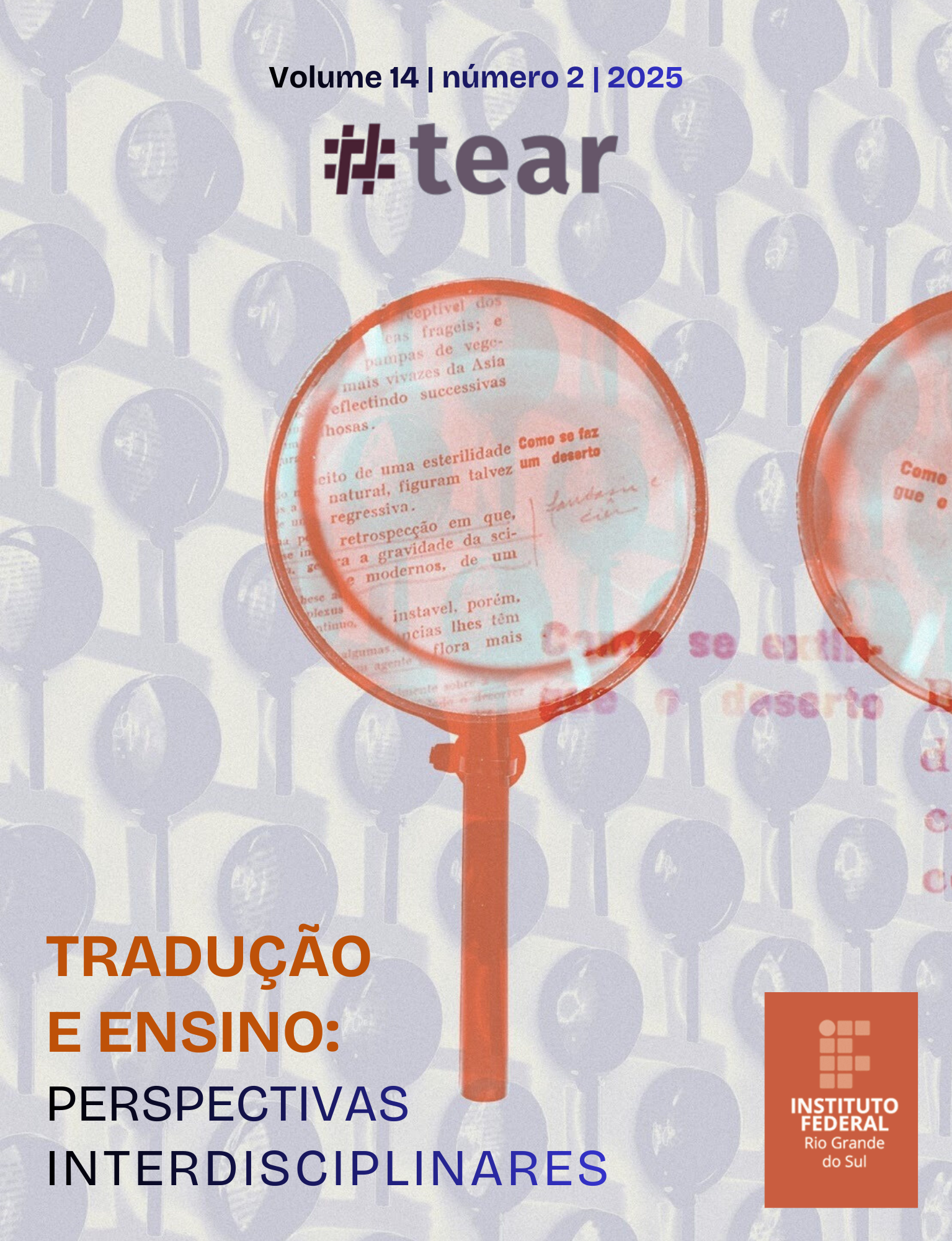
Cover Art:
Reference: Desertões (2015), by Elida Tessler
Graphic design: Maíra Velho
Artist's note:
For the graphic design of this edition, I took Elida Tessler's Desertões (2015) as a reference. The artist, whose work interconnects literature and visual arts, rewrites and reinterprets the written word. In Desertões, Tessler brings together 1,018 photographs under magnifying glasses, recording excerpts underlined and annotated by translator Donaldo Schüler in his copy of Os Sertões, by Euclides da Cunha. Tessler translates literature into another system of signs, producing a work that is simultaneously commentary, translation, and creation, an action that also inspires the visual reinterpretation proposed for this cover. The graphic design seeks to highlight the transition between word and image, central both to Tessler's work and to contemporary possibilities for translation. The reference to the magnifying glass and fragments suggests closeness, analysis, and rereading, reflecting translation as an interdisciplinary and investigative practice, in dialogue with the multiple articulations between translation, teaching, and interdisciplinarity.
Published:
2025-12-11